cocktaildna

United States

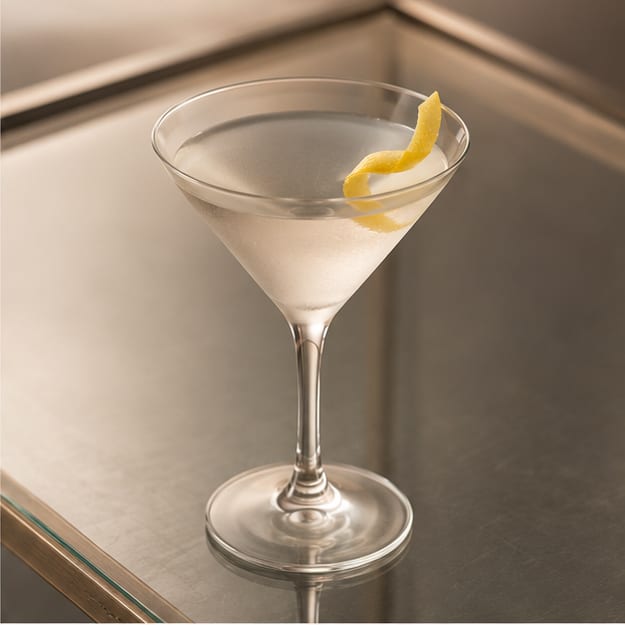
Martini

Also known as Dry Martini, Gin Martini, Vodka Martini, Vodkatini

A cold, spirit-forward drink that is mostly gin or vodka with just a whisper of dry vermouth.

spirit-forwarddrybotanicaljunipercitrus oilbracingherbalcoldstrong

%

ABV

Difficulty

Martini

Overview

What this drink is like

The first sip hits you with a sharp, cold bite of spirit and botanicals. The middle softens slightly as the vermouth adds a faint, off-dry herbal sweetness. It finishes clean and warming, leaving the scent of juniper and citrus oil on your breath.

Who will like it

This is for people who like strong, spirit-forward drinks with no sweetness and a crisp, botanical edge.

When to drink

Drink this before dinner to wake up your palate, or as a sharp, settling nightcap.

Ordering tip

Specify your spirit, how much vermouth you want, and your garnish—saying 'Gin, extra dry, with a twist' leaves no guesswork for the bartender.

Ice: NoneTemp: FrozenCost: $2–$4Glass: MartiniBatch-friendlyMake aheadHome bar friendly

Flavor

Taste profile

A Martini is a cold, sharp, and potent drink that hits you right away with the taste of gin. The dry vermouth softens the edges just enough to make the spirit approachable, adding a faint herbal shadow without any real sweetness. The lemon oil on top brightens the whole thing up. It is strong, dry, and lingers on your palate long after you swallow.

Finish: The finish runs long and warming, with juniper and citrus oils lingering on the breath.

Primary tastes

herbalbitterearthy

Secondary

floralnutty

Aroma

junipercitrus oildry botanicals
  • Bitternessmildly bitter

    The bitterness is subtle, coming from the gin's botanicals and the dry vermouth rather than a bittering agent.

  • Strengthvery spirit-forward

    This is almost entirely straight liquor, making it one of the strongest cocktails you can order.

  • Refreshinglow refreshment

    It is cold and sharp, but the high alcohol and lack of juice or soda make it more of a slow sipper than a thirst quencher.

  • Complexitymoderately layered

    The interplay between the gin's botanicals and the vermouth's herbs creates depth, but it stays focused on two main ingredients.

Recipe

Make it at home

Stirred · Martini · equal parts on Gin. London Dry recommended for a classic, juniper-forward profile

Before you start

Put your Martini glass in the freezer for at least 10 minutes before you start. Make sure your dry vermouth is fresh and has been stored in the fridge, not the cupboard.

Ingredients

  • GinBase SpiritLondon Dry recommended for a classic, juniper-forward profile60ml
  • Dry VermouthVermouthKeep refrigerated after opening; adjust amount to taste10ml
  • Orange BittersoptionalBittersAdds a bright top note that ties the gin and vermouth together2 dashes
  • Lemon TwistGarnishExpress the oils over the drink and drop it in1 twist

Garnish: Lemon twist

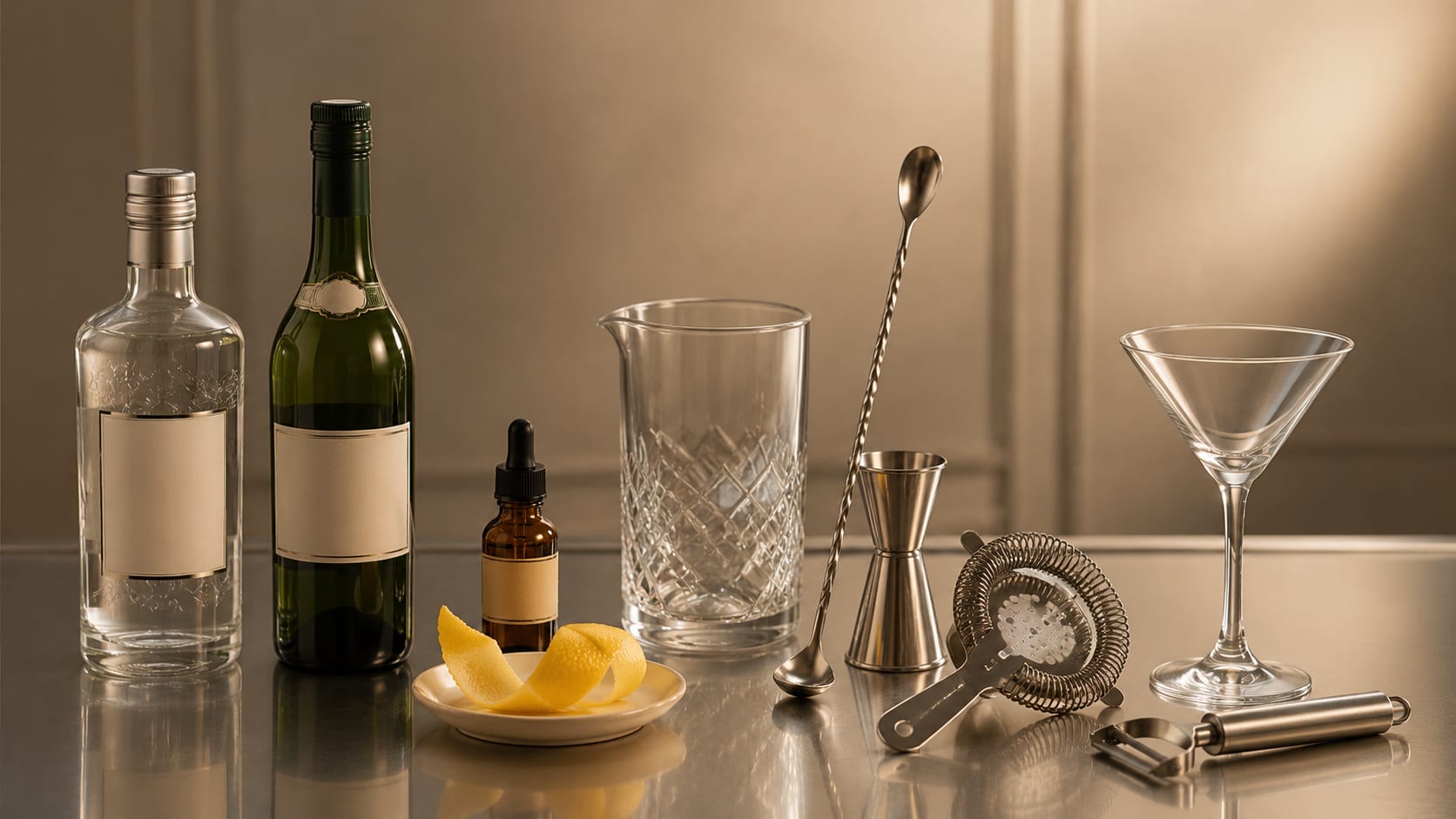
Tools

  • Mixing glass · Mixing

    To combine and chill the ingredients with ice without making them cloudy

    At home: A large pint glass or wide-mouth mason jar

  • Bar spoon · Mixing

    To stir the drink smoothly and quickly without splashing

    At home: A long iced tea spoon or a chopstick

  • Jigger · Measuring

    To measure the gin and vermouth accurately

    At home: A shot glass or measuring spoons

  • Hawthorne strainer · Straining

    To hold back the ice while pouring the liquid into the glass

    At home: A slotted spoon or a fine mesh tea strainer

  • Martini glass · Serving

    The traditional V-shaped or coupe glass for serving the drink

    At home: A small wine glass or any shallow stemmed glass

  • Vegetable peeler · Garnish

    To cut a wide strip of lemon peel for the twist

    At home: A sharp paring knife

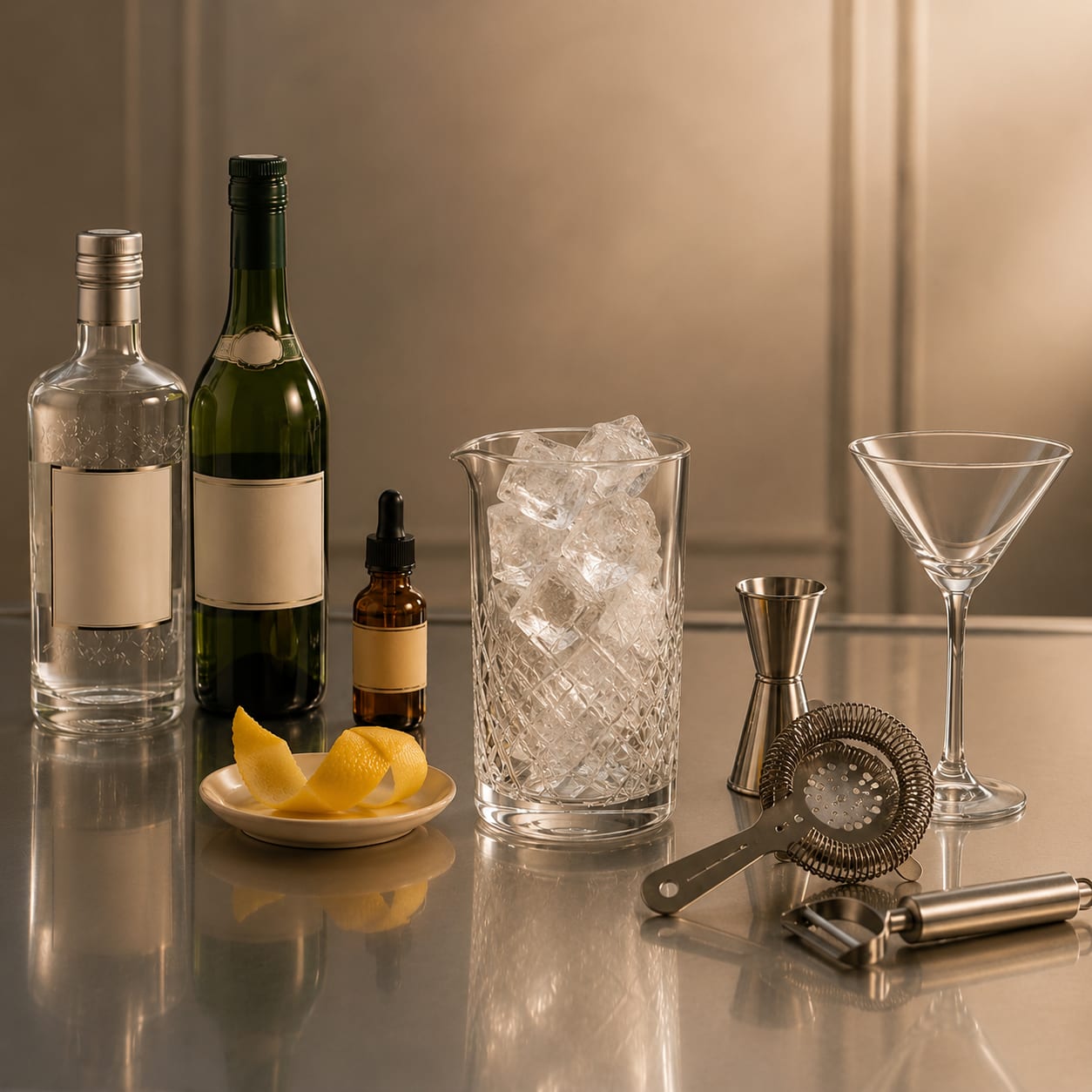
Ingredients and tools to make Martini
Ingredients and tools

Steps

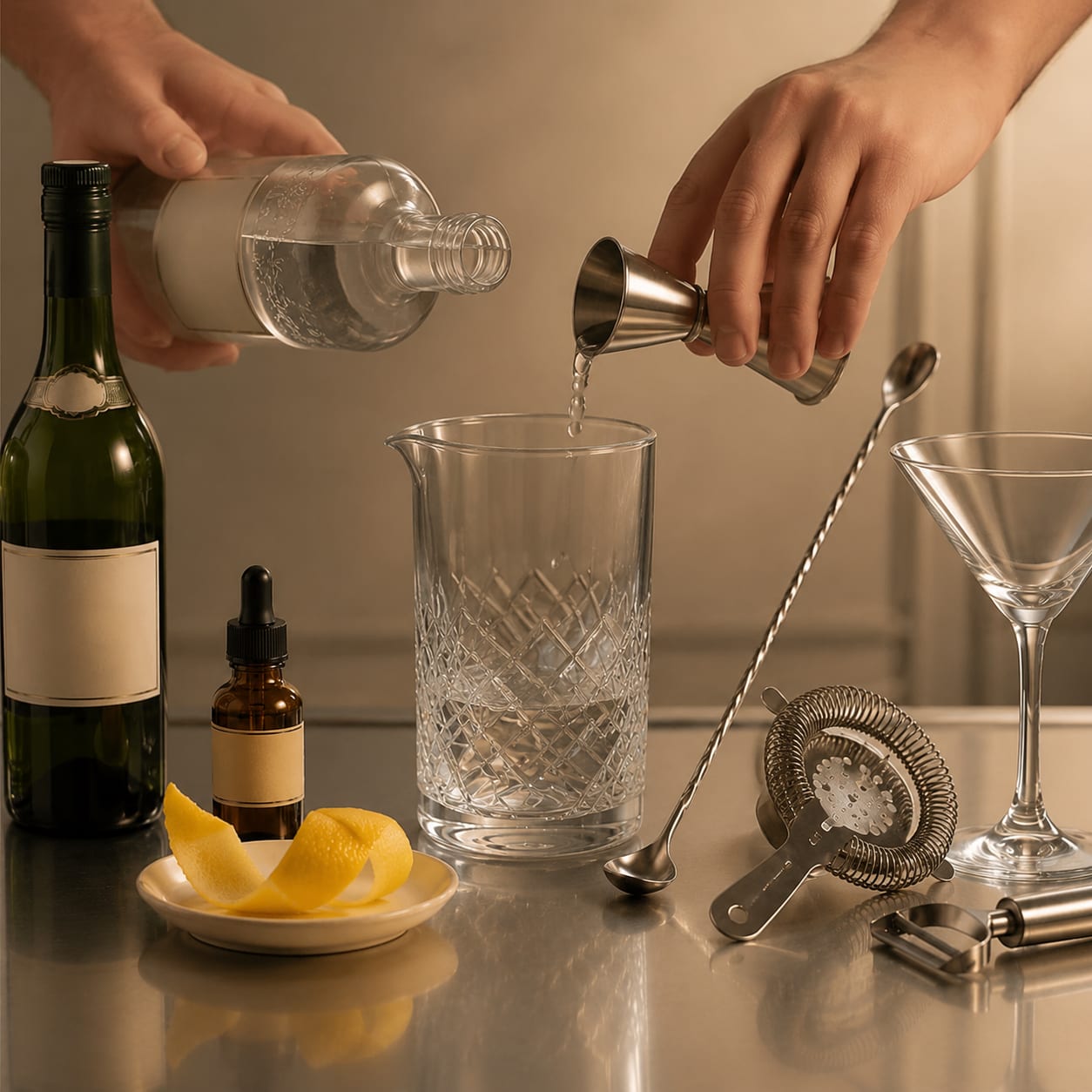
  1. 1

    Grab your mixing glass and measure out 60ml of gin and 10ml of dry vermouth. If you are using orange bitters, add 2 dashes now. The small amount of vermouth is what makes it a Martini rather than just a glass of cold gin.

    Step 1 — how to make Martini

    !Using old, oxidized vermouth that tastes like cardboard and ruins the drink.

  2. 2

    Fill the mixing glass almost to the top with large, solid ice cubes. Big cubes melt slower, which chills the drink fast without watering it down too quickly.

    Step 2 — how to make Martini

    !Using small, fragmented ice that melts too fast and over-dilutes the spirit.

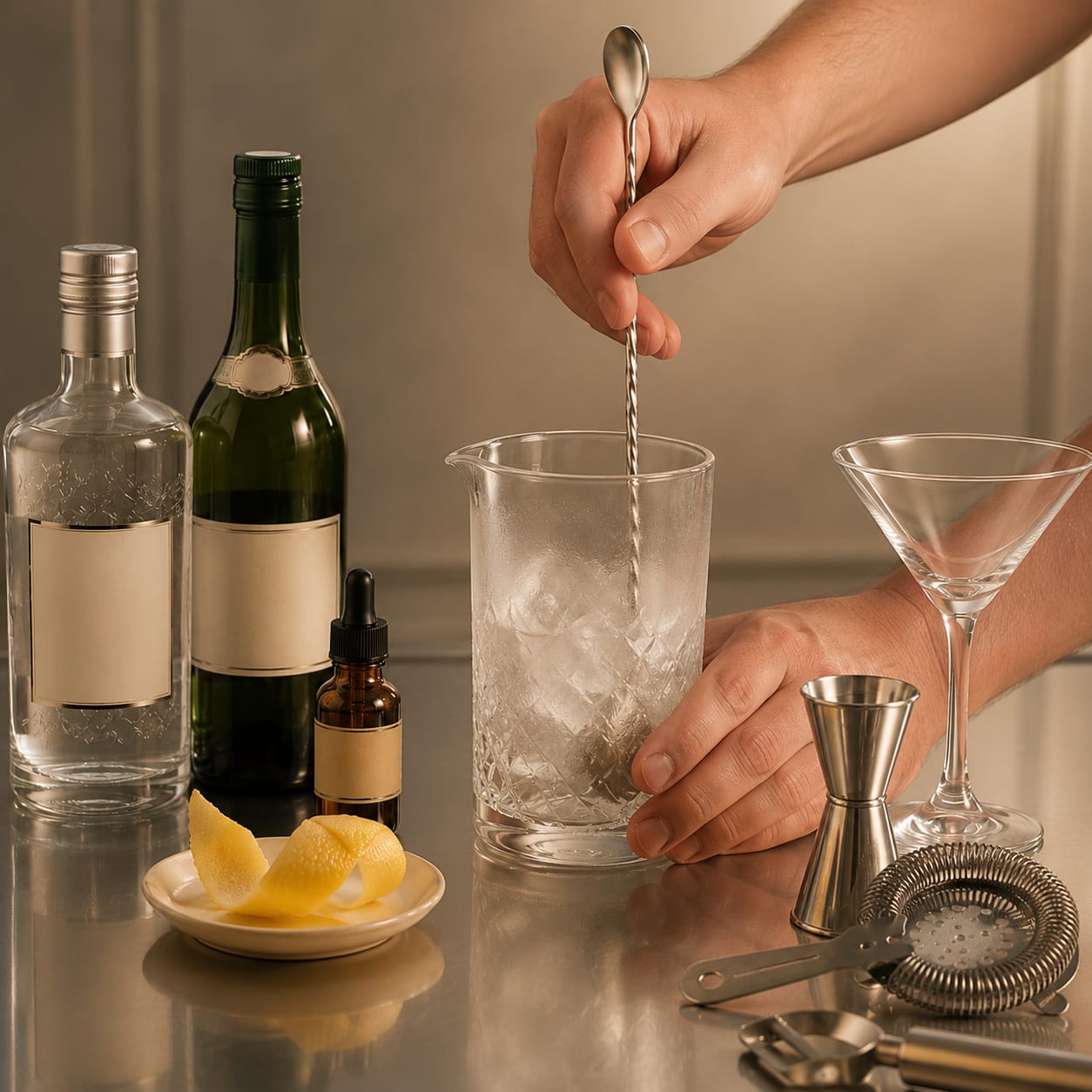
  3. 3

    Stir the mixture steadily with your bar spoon for about 20 to 30 seconds, moving the ice smoothly around the glass. Keep going until the outside of the mixing glass feels very cold and frosty to the touch.

    ~25s

    Step 3 — how to make Martini

    !Stirring too fast or aggressively, which chips the ice and makes the drink cloudy.

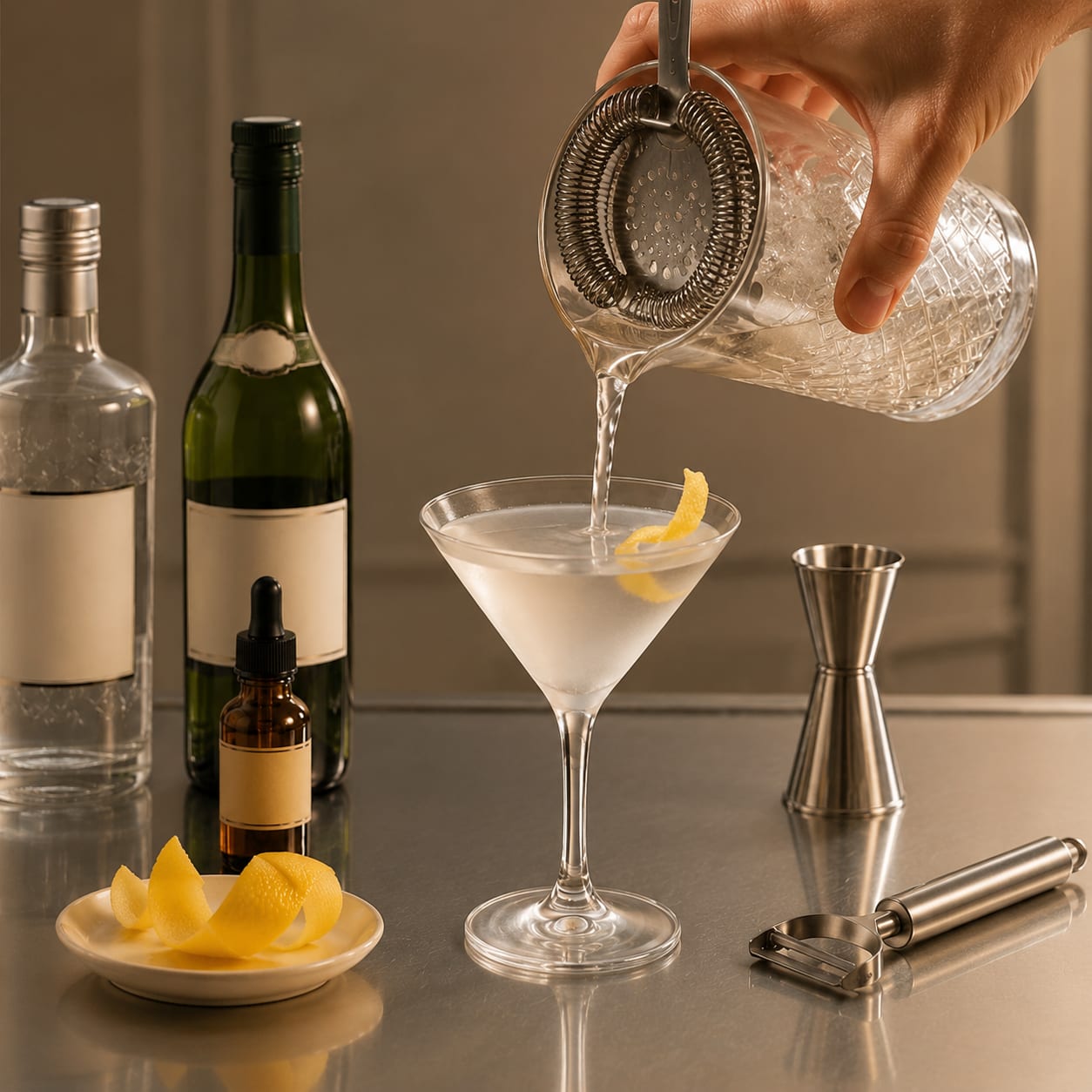
  4. 4

    Take your frozen Martini glass out of the freezer. Place your Hawthorne strainer over the top of the mixing glass and pour the liquid through the strainer into the chilled glass. Stop pouring when the liquid sits just below the rim.

    Step 4 — how to make Martini

    !Letting small ice shards slip into the final drink, which melt and dilute the first few sips.

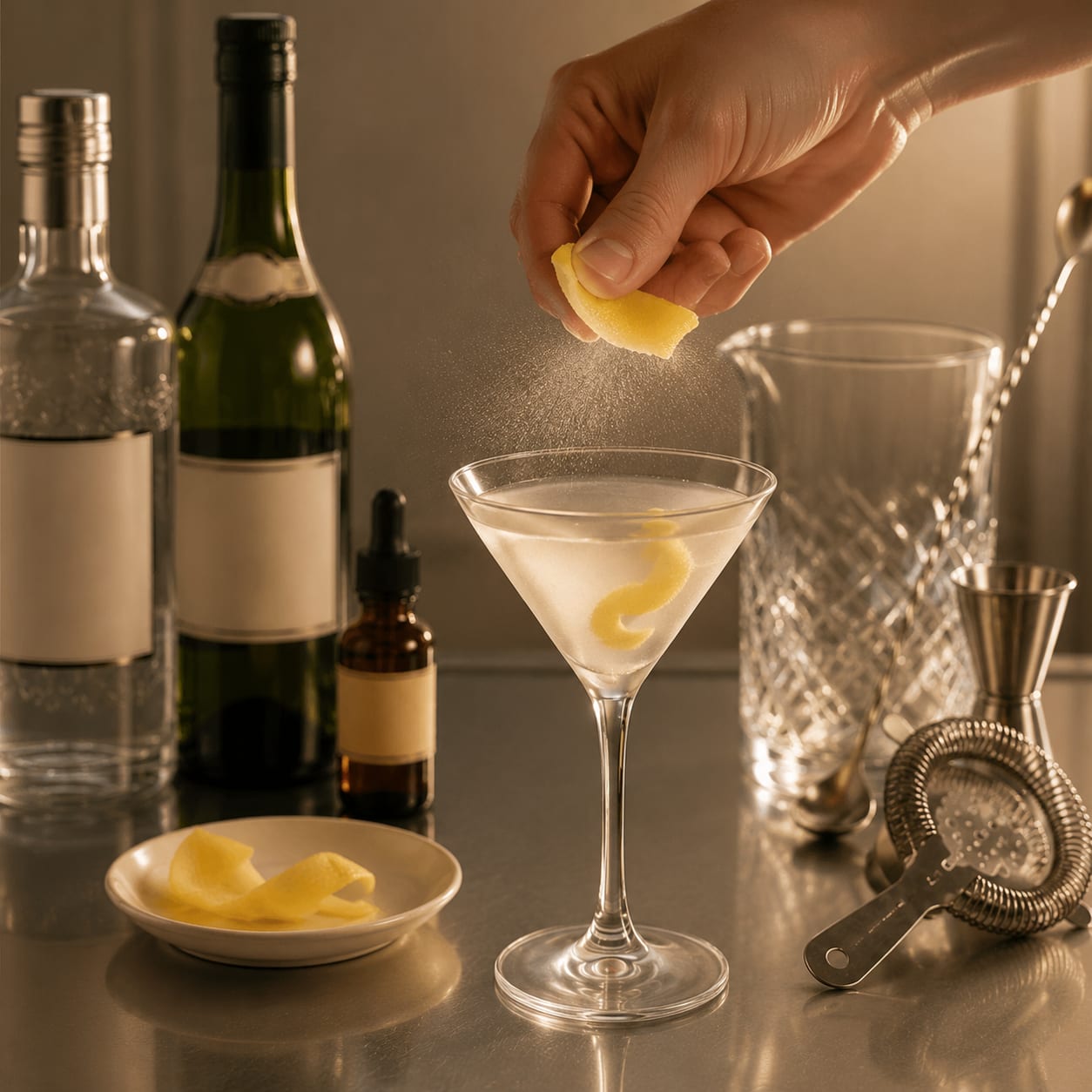
  5. 5

    Take your lemon peel and hold it over the drink, skin-side down. Squeeze it firmly so a fine mist of citrus oils sprays across the surface of the drink. Drop the peel into the glass and serve it right away while it is still freezing cold.

    Step 5 — how to make Martini

    !Twisting the peel the wrong way so the oils spray away from the drink instead of onto it.

Serve

Serve it immediately in the chilled glass with no ice. A Martini warms up fast, so drink it while it is still frosty and before the chill fades.

Variations

Ingredient substitutions

Each row shows what you can swap in place of an original ingredient, and how the drink changes.

Swap options for Gin

  • GinVodka
    Match
    Common availability

    GinVodka: Removes the botanical and juniper notes, leaving a clean, neutral, and sharper spirit taste.

Swap options for Dry Vermouth

  • Dry VermouthLillet Blanc
    Match
    Specialty availability

    Dry VermouthLillet Blanc: Adds a slightly sweeter, more floral, and citrus-forward profile than dry vermouth.

Swap options for Lemon Twist

  • Lemon TwistOlive
    Match
    Common availability

    Lemon TwistOlive: Swaps the bright citrus oil for a briny, savory note that changes the drink into a Dirty Martini.

Related

Similar cocktails

Cousin drinks that share DNA with this one — each profile stands on its own.

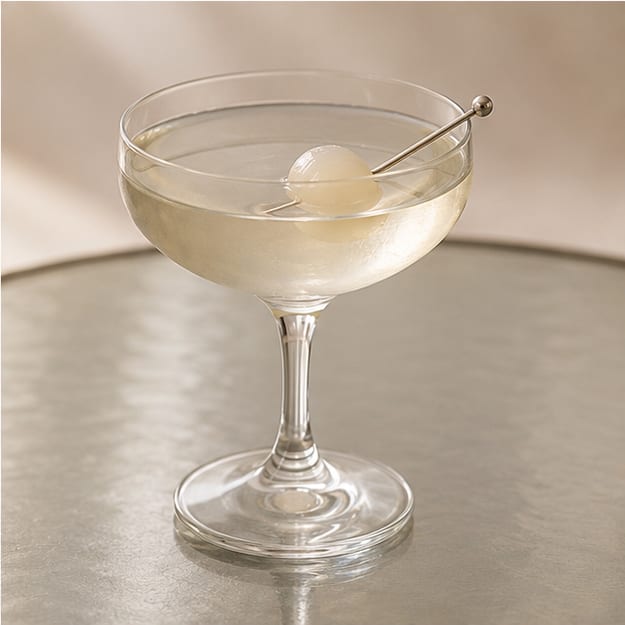
Gibson

Similar cocktail

Gibson

The Gibson uses a cocktail onion garnish instead of a lemon twist or olive.

Match

They taste nearly identical until the finish, where the onion gives the Gibson a briny, savory edge instead of the Martini's bright citrus lift.

In common: stirred, spirit-forward, served up, very dry

Ingredients

Both share

Gin, Dry Vermouth

Only in Martini

Lemon Twist

Only in Gibson

Cocktail Onion

The drinks are identical in their liquid ingredients, but the Gibson swaps the lemon twist for a pickled onion.

Flavor

Shared flavors

strong gin backbone, dry vermouth herbal shadow, sharp and cold

How Gibson differs

briny, savory, less bright

View recipe & details →
Vodka Martini

Similar cocktail

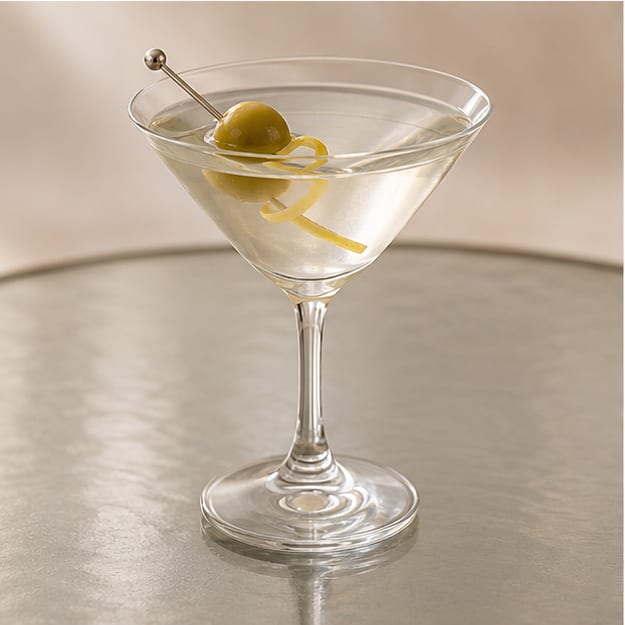
Vodka Martini

The Vodka Martini uses vodka instead of gin as the base spirit.

Match

The Vodka Martini is cleaner and blunter, lacking the layered juniper and botanical notes that define the gin version.

In common: stirred, spirit-forward, served up, very dry

Ingredients

Both share

Dry Vermouth

Only in Martini

Gin

Only in Vodka Martini

Vodka

The Vodka Martini replaces the gin with vodka, stripping away the botanical flavor while keeping the vermouth and format the same.

Flavor

Shared flavors

dry structure, vermouth herbal hints, cold and sharp

How Vodka Martini differs

cleaner, less botanical, blunter

View recipe & details →

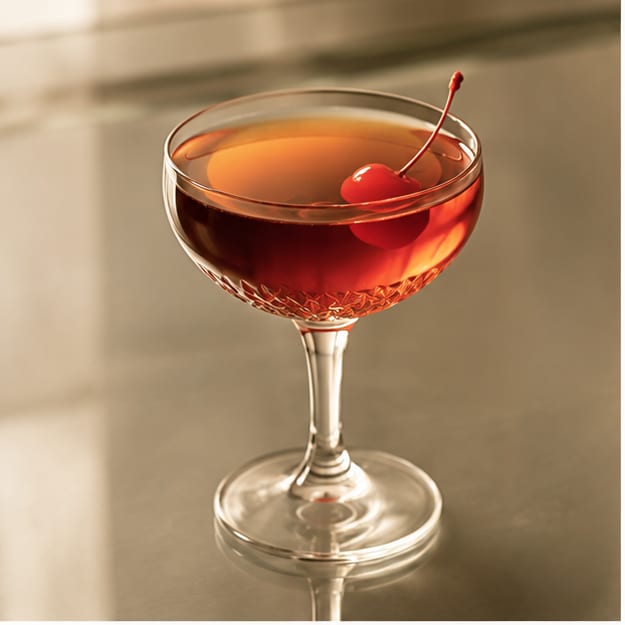
Manhattan

Similar cocktail

Manhattan

The Manhattan uses whiskey and sweet vermouth instead of gin and dry vermouth.

Match

The Manhattan is sweeter and richer with baking spice notes from the whiskey and sweet vermouth, while the Martini is sharper, drier, and lighter.

In common: stirred, spirit-forward, served up

Ingredients

Both share

Dry Vermouth

Only in Martini

Gin, Lemon Twist

Only in Manhattan

Rye Whiskey, Sweet Vermouth, Angostura Bitters, Maraschino Cherry

While both are stirred, spirit-forward drinks, the Manhattan uses whiskey and sweet vermouth for a richer, heavier flavor profile.

Flavor

Shared flavors

spirit-forward punch, stirred chill, botanical undertones from vermouth

How Manhattan differs

sweeter, warmer spices, heavier body

View recipe & details →

History

Origin

The exact origin is heavily disputed, with competing claims tying it to a bartender in Martinez, California, and another to the Knickerbocker Hotel in New York. The drink evolved from a sweeter, Martinez-style cocktail in the late 19th century into the drier, gin-forward version we know today by the early 20th century.

Era
1880s
IBA
The Unforgettables
Data version
IBA 2020 spec
Confidence

The ratio of gin to vermouth varies widely by personal preference; the 6:1 ratio is a modern standard but older recipes used equal parts.

Practical

Tips & pitfalls

What works at home and what to skip when making this drink.

Tips

Worth knowing before you pour

  • Keep your dry vermouth in the fridge once opened, and toss it after a month.
  • Stirring gives the drink a silky texture; shaking makes it cloudy and sharp.
  • Rinsing the glass with vermouth and dumping it gives the faintest whisper of flavor.

Avoid

Common mistakes

  • Do not shake a Martini; it waters down the drink and makes it look cloudy.
  • Never use vermouth that has been sitting unrefrigerated for weeks.
  • Do not leave the finished drink sitting out; it warms up fast.