cocktaildna

Brazil

Bahia

Also known as Batida de Coco, Coco Batida

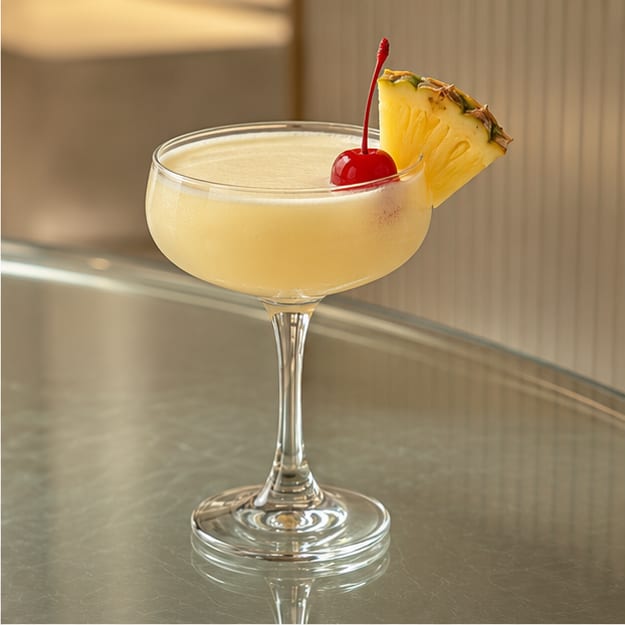
A creamy, coconut-forward rum drink that tastes like a beach vacation in a glass.

coconutpineapplecreamytropicalsweetcachaçadessertbrazilianshakenindulgent

%

ABV

Difficulty

Bahia

Overview

What this drink is like

The first sip is all rich coconut and sweet vanilla, coating your tongue with a milkshake-like thickness. The middle brings out the rum's subtle warmth and a faint tropical fruit note from the pineapple. It finishes sweet and lingering, leaving a velvety coconut residue on your lips.

Who will like it

This is for people who like rich, dessert-style drinks and enjoy Piña Coladas but want something a bit smoother and less icy.

When to drink

Serve this at a summer cookout or sip it on a hot afternoon when you want something indulgent and cooling.

Ordering tip

If the bar makes it with a pre-made coconut syrup instead of cream of coconut, ask for a splash of heavy cream to get that signature thick texture back.

Ice: NoneTemp: ColdCost: $8–$12Glass: CoupeBatch-friendlyHome bar friendly

Flavor

Taste profile

This is a straightforward, sweet, and creamy tropical drink. The coconut hits you first and stays with you the whole way through, backed up by a gentle pineapple sweetness. There is not much bitterness or acidity to cut through the richness, so it drinks more like a liquid dessert than a sharp, palate-cleansing cocktail. The cachaça gives it a slightly grassy, earthy foundation that white rum would not provide, but the alcohol stays pretty hidden under all that sugar.

Finish: The finish is long and sweet, leaving a coating of coconut oil and a faint sugarcane warmth on the back of your throat.

Primary tastes

sweetcreamyfruity

Secondary

earthy

Aroma

toasted coconutfresh pineapplesugarcane
  • Sweetnessvery sweet

    The cream of coconut and pineapple juice make this a dessert-level sweet cocktail.

  • Sournesslow acidity

    The pineapple adds a faint tartness, but it is buried under the heavy coconut sweetness.

  • Strengthmoderate strength

    The cachaça is present but the thick sweetness masks the alcohol effectively.

  • Refreshingmoderately refreshing

    It is cold and fruity, but the heavy, creamy body keeps it from feeling truly thirst-quenching.

  • Creaminessvery creamy

    The cream of coconut gives this a thick, milkshake-like consistency that coats the palate.

  • Complexitystraightforward

    What you see is what you get: coconut and pineapple dominate with little layering or nuance.

Recipe

Make it at home

Shaken · Coupe · equal parts on Cachaça. A young, unaged cachaça works best here to keep the drink bright and grassy.

Before you start

Stir your cream of coconut well before measuring if it has separated in the can, and make sure your pineapple juice is cold.

Ingredients

  • CachaçaBase SpiritWhite rum works if you can't find cachaça, but you lose the signature cane funk.45ml
  • Cream of CoconutOtherUse a bar-specific brand like Coco López, not coconut milk or coconut cream from a can.60ml
  • Pineapple JuiceJuiceFresh squeezed is best; canned juice can taste metallic and flat.30ml

Garnish: Pineapple wedge, Maraschino cherry

Tools

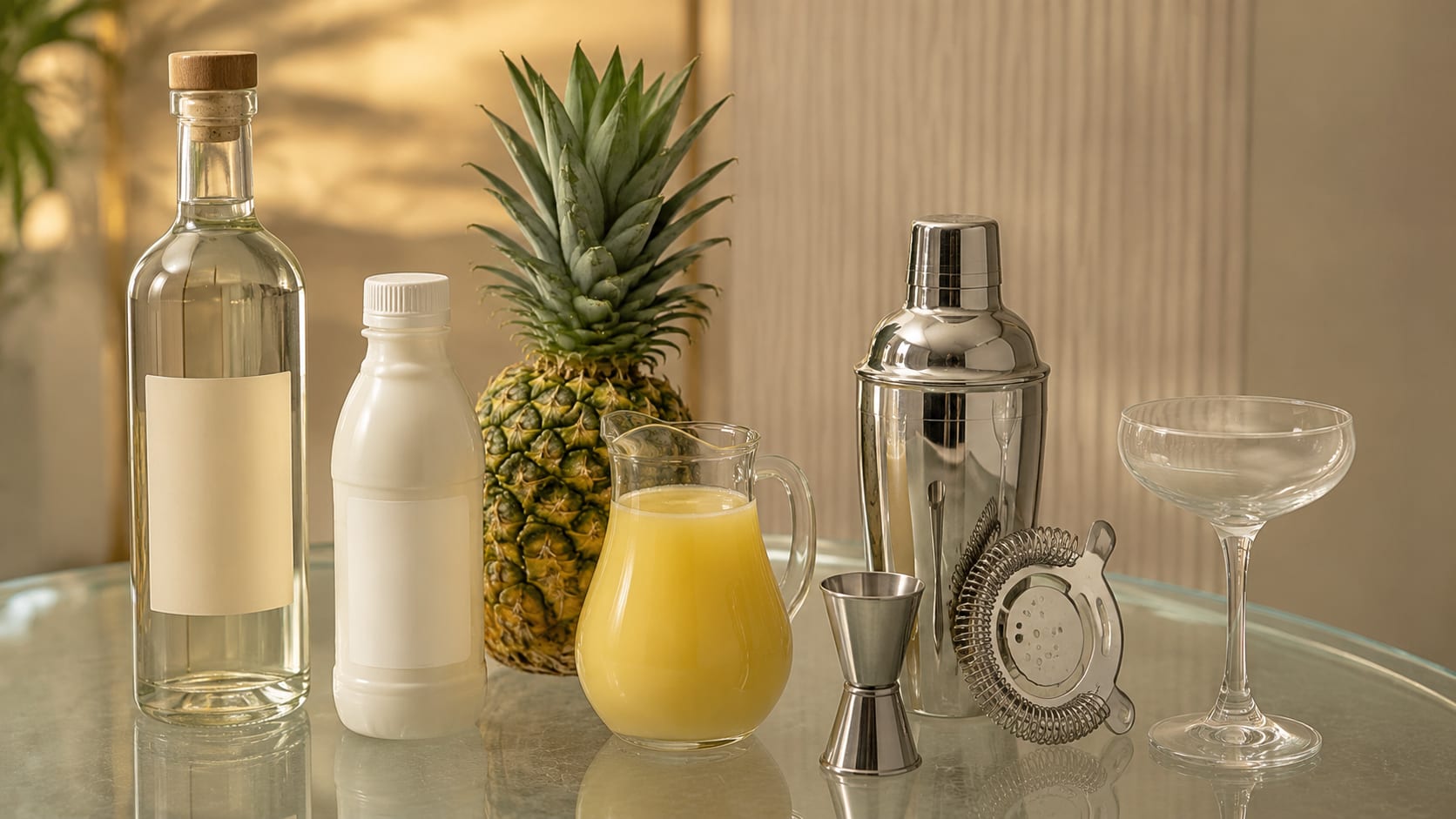
  • Cocktail Shaker · Shaking

    To blend the thick cream of coconut with the juice and spirit while chilling the mixture.

    At home: A large mason jar with a tight lid.

  • Jigger · Measuring

    To measure the spirit, cream of coconut, and pineapple juice accurately.

    At home: A measuring cup or shot glass.

  • Hawthorne Strainer · Straining

    To hold back the ice and any chunks of cream of coconut when pouring the drink.

    At home: A fine mesh kitchen sieve.

  • Coupe or Hurricane Glass · Serving

    To serve the drink; a coupe works for shaken, a hurricane glass works for blended.

    At home: A wine glass or any large stemmed glass.

  • Blender · optional · Mixing

    To blend the drink with ice for a frozen version.

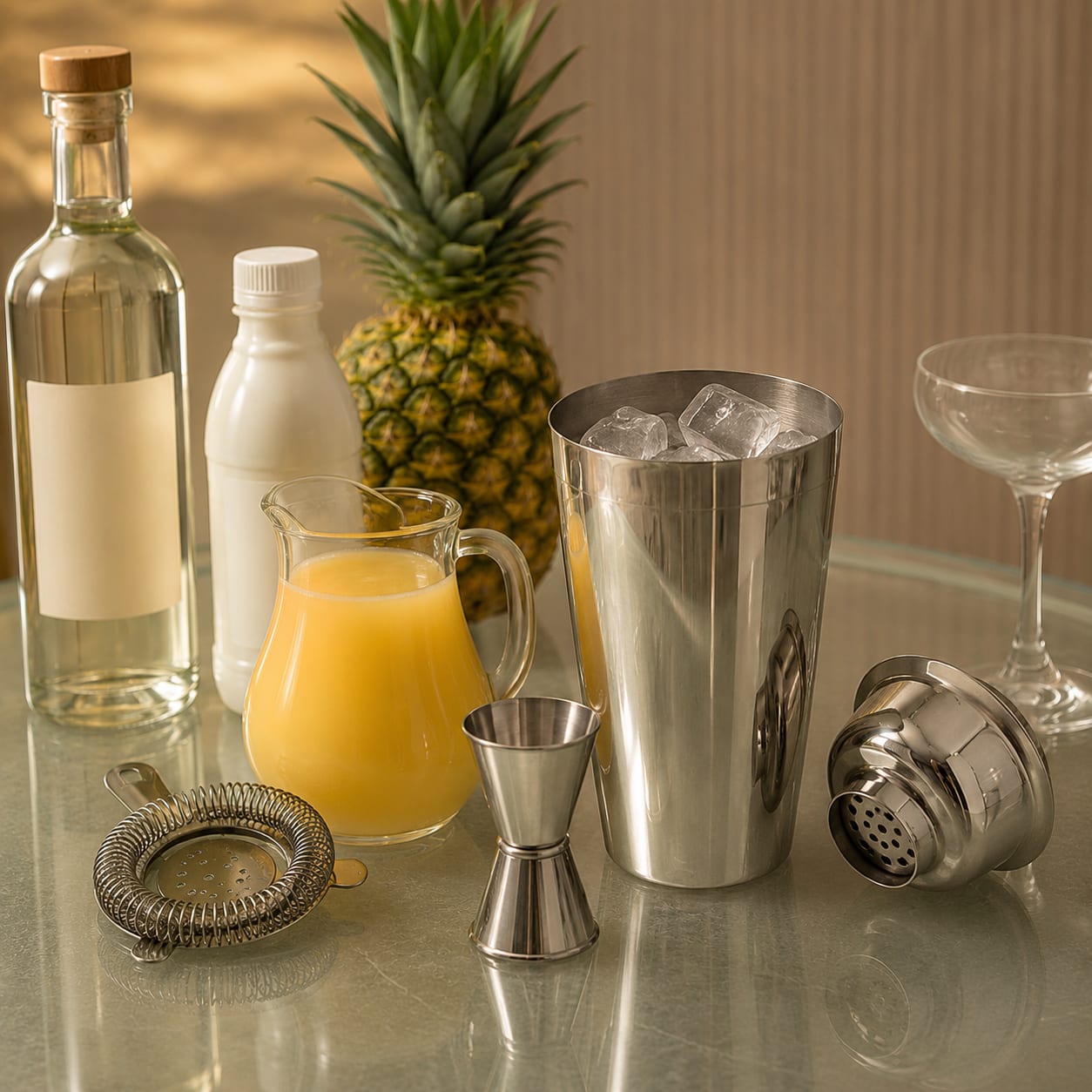
Ingredients and tools to make Bahia
Ingredients and tools

Steps

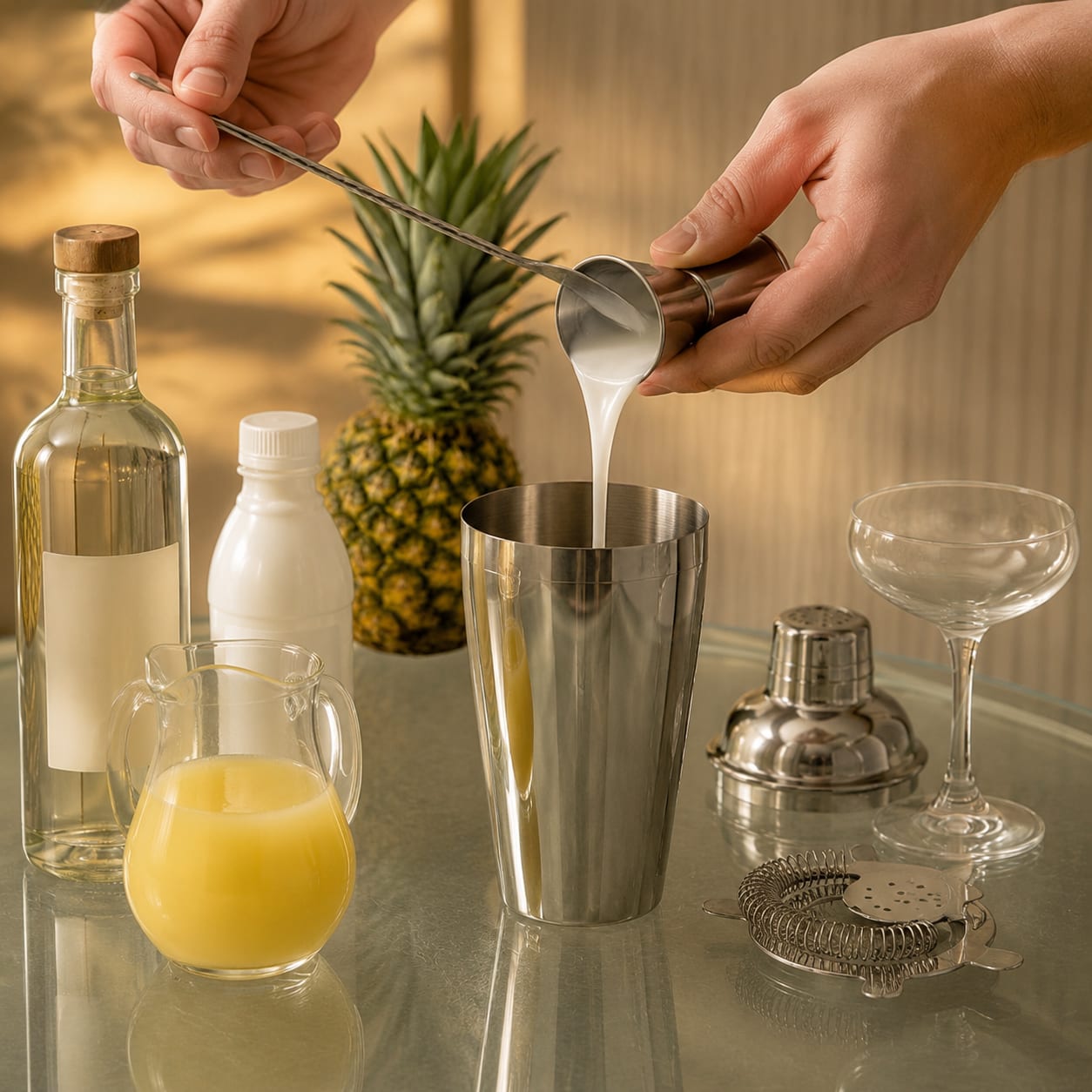
  1. 1

    Measure out 45ml of cachaça, 60ml of cream of coconut, and 30ml of pineapple juice into your shaker. If the cream of coconut is thick and stubborn, use a bar spoon to scrape it all out of the jigger.

    Step 1 — how to make Bahia

    !Using coconut milk instead of cream of coconut will make the drink thin and watery.

  2. 2

    Fill the shaker about two-thirds full with ice cubes. The ice needs to be solid, not cracked, so it chills the drink fast without melting too quickly into that thick mix.

    Step 2 — how to make Bahia

    !Using crushed ice will over-dilute the drink before the ingredients even blend properly.

  3. 3

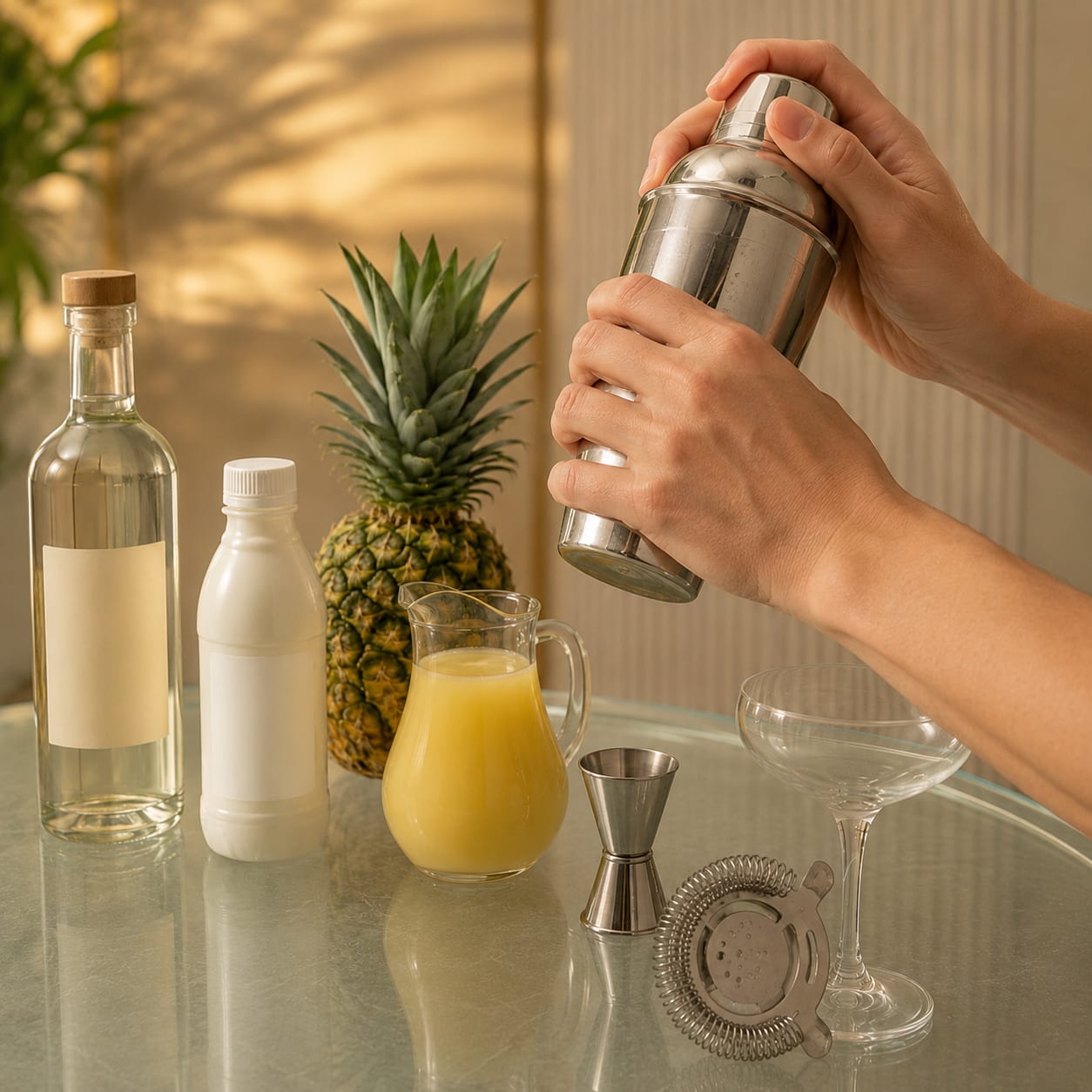
    Put the top on the shaker and shake hard for about 12 seconds. You need to shake this longer than a standard sour because the cream of coconut is heavy and takes extra effort to blend smoothly with the juice and rum.

    ~12s

    Step 3 — how to make Bahia

    !Shaking too gently leaves clumps of coconut floating in the drink instead of a smooth, even texture.

  4. 4

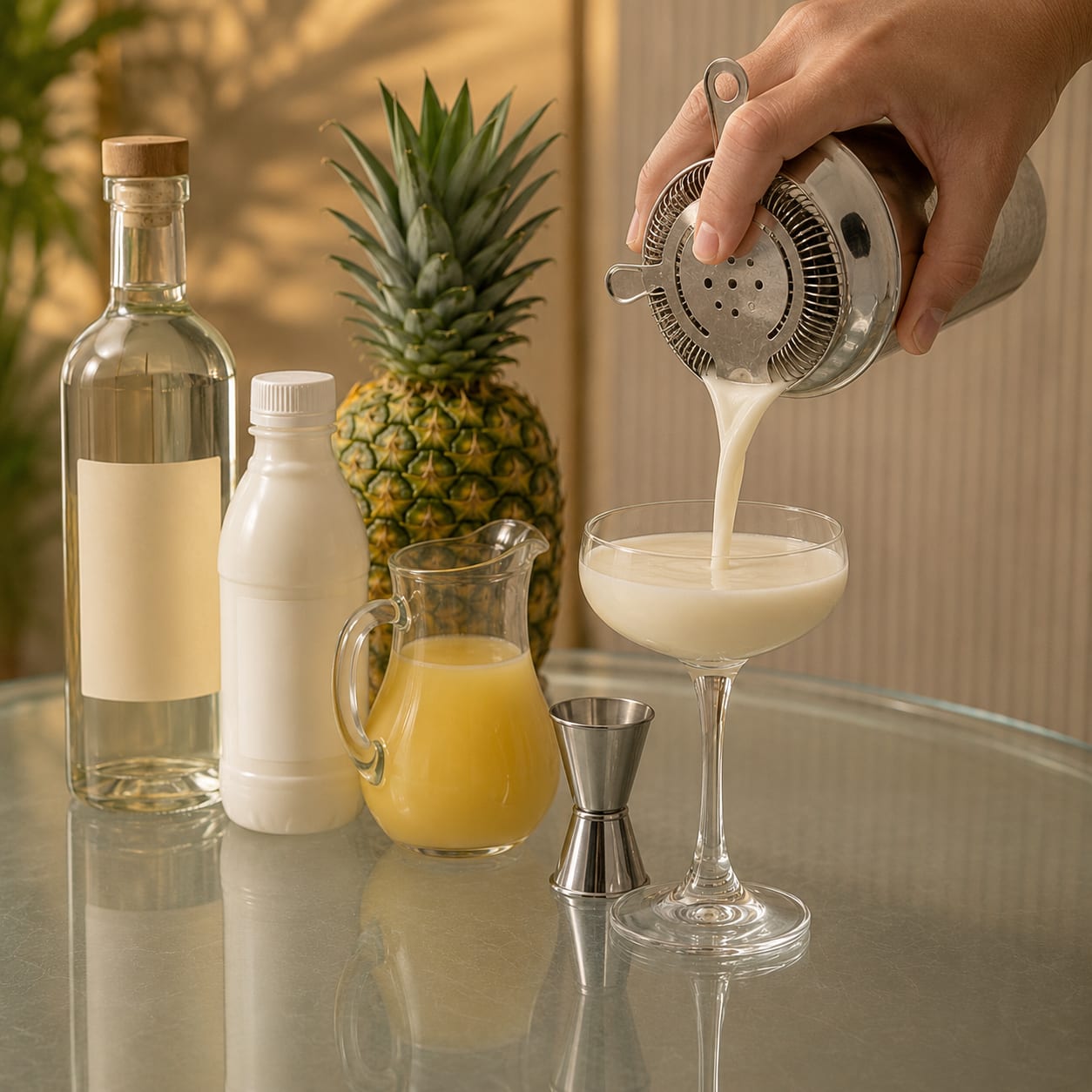
    Take the lid off the shaker and fit a Hawthorne strainer over the rim. Pour the drink into a chilled coupe glass, straining out the ice. The drink should look opaque, creamy white, and smooth.

    Step 4 — how to make Bahia

    !Pouring too fast can let small ice shards slip past the strainer into the glass.

  5. 5

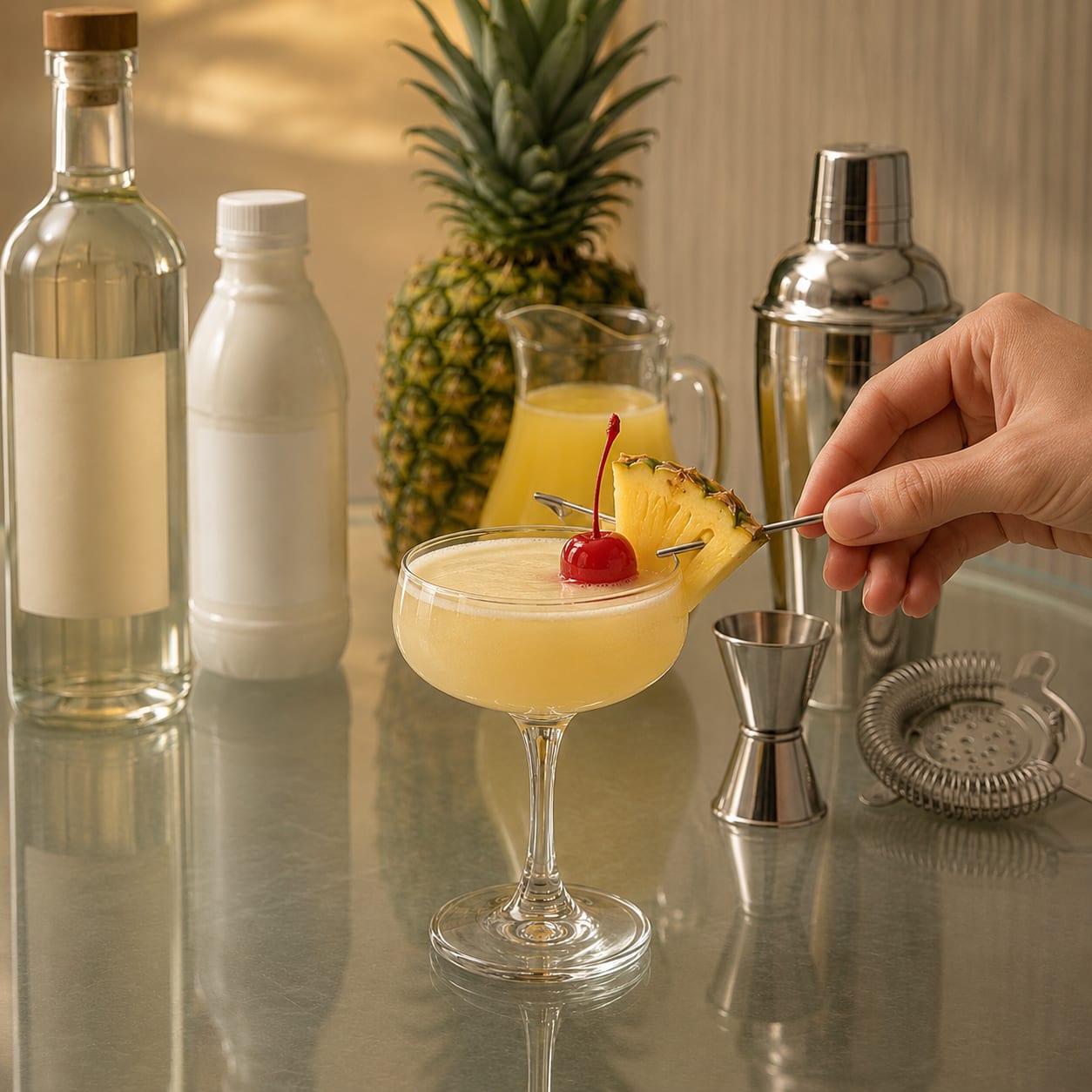
    Skewer a pineapple wedge and a maraschino cherry on a cocktail pick and rest it across the rim of the glass. The garnish adds a bright tropical smell right under your nose as you sip.

    Step 5 — how to make Bahia

Serve

Serve it right away while it is still frosty and thick. If you let it sit, the ice will melt and the creamy texture will break down into a watery mess.

Variations

Ingredient substitutions

Each row shows what you can swap in place of an original ingredient, and how the drink changes.

Swap options for Cachaça

  • CachaçaWhite Rum
    Match
    Common availability

    CachaçaWhite Rum: Removes the grassy, earthy funk of cachaça and makes the drink cleaner and sweeter.

  • CachaçaLight Agave Spirit
    Match
    Specialty availability

    CachaçaLight Agave Spirit: Adds an herbal, peppery note that clashes slightly with the heavy coconut but keeps the vegetal backbone.

Swap options for Cream of Coconut

  • Cream of CoconutCoconut Milk + Simple Syrup
    Match
    Common availability

    Cream of CoconutCoconut Milk + Simple Syrup: Makes the drink thinner and less rich, requiring you to adjust the sweetness manually.

Related

Similar cocktails

Cousin drinks that share DNA with this one — each profile stands on its own.

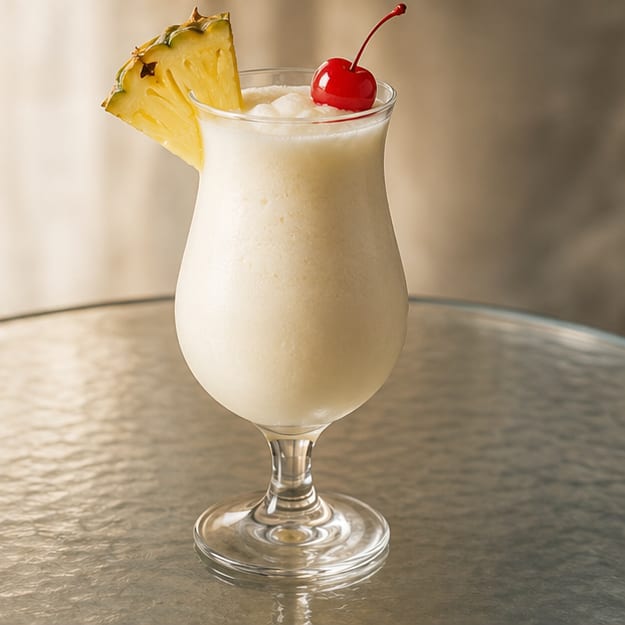
Piña Colada

Similar cocktail

Piña Colada

The Piña Colada uses rum and is typically served blended or over crushed ice, while the Bahia uses cachaça and is served up or on the rocks.

Match

They taste almost identical on the front of the palate, but the Bahia has a drier, earthier finish from the cachaça, whereas the Piña Colada stays uniformly sweet and icy.

In common: Creamy tropical profile, Coconut and pineapple base, Sweet and indulgent

Ingredients

Both share

Cream of Coconut, Pineapple Juice

Only in Bahia

Cachaça

Only in Piña Colada

White Rum

Swapping white rum for cachaça is the main difference, which trades a clean, neutral spirit for a grassy, earthy one.

Flavor

Shared flavors

Heavy coconut sweetness, Pineapple fruitiness, Creamy mouthfeel

How Piña Colada differs

Bahia is earthier, Piña Colada is icier and more dilute

View recipe & details →
Batida

Similar cocktail

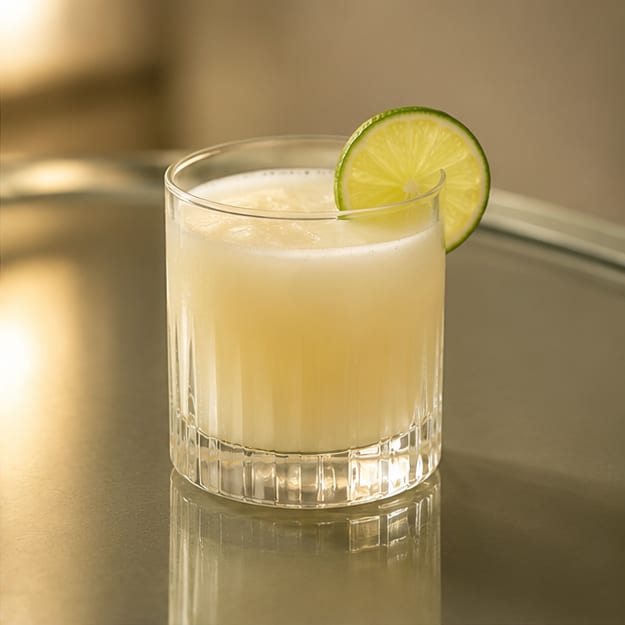
Batida

A general Batida can be made with any fruit or flavoring, while the Bahia specifically uses coconut and pineapple.

Match

The Bahia drinks brighter and more tropical because of the pineapple, while a standard coconut Batida is heavier and more caramelized from the condensed milk.

In common: Brazilian origin, Cachaça base, Blended fruit and spirit

Ingredients

Both share

Cachaça, Cream of Coconut

Only in Bahia

Pineapple Juice

Only in Batida

Condensed Milk

The Bahia uses pineapple juice for fruit and tartness, whereas a traditional Batida often relies on condensed milk for sweetness and body without the fruit component.

Flavor

Shared flavors

Cachaça funk, Creamy texture, Sweet profile

How Batida differs

Bahia is fruitier, Batida is milkier and more caramel-like

View recipe & details →

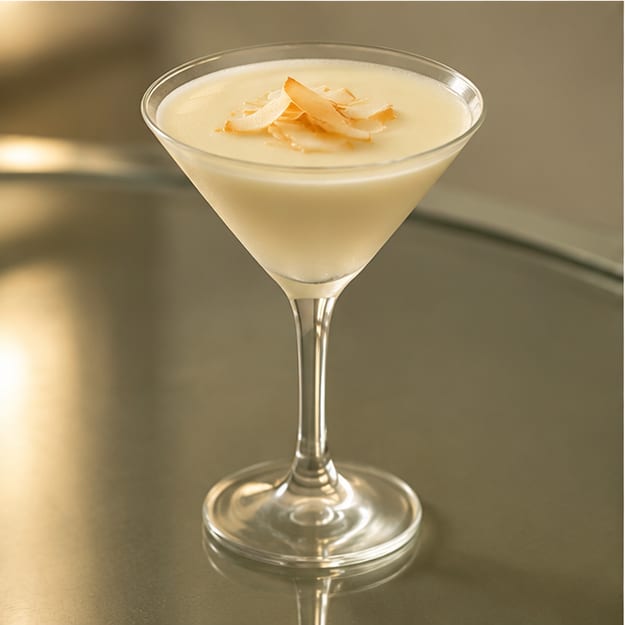
Coconut Martini

Similar cocktail

Coconut Martini

The Coconut Martini uses vodka for a neutral base, letting the coconut stand completely alone without fruit or earthy notes.

Match

The Coconut Martini is a cleaner, more one-note dessert drink, while the Bahia has more going on with the pineapple tartness and cachaça grassiness.

In common: Creamy texture, Coconut-forward, Served up in a coupe

Ingredients

Both share

Cream of Coconut

Only in Bahia

Cachaça, Pineapple Juice

Only in Coconut Martini

Vodka, Vanilla Extract

Replacing cachaça and pineapple with vodka and vanilla strips away the earthy and fruity elements, leaving a pure coconut-vanilla flavor.

Flavor

Shared flavors

Thick, creamy body, Sweet coconut flavor

How Coconut Martini differs

Bahia is fruity and earthy, Coconut Martini is clean and dessert-like

View recipe & details →

History

Origin

The Bahia is essentially a Batida de Coco, a style of cocktail originating in Brazil that blends cachaça with fruit juices and sweeteners. The exact creator and origin bar are unknown, but it evolved from traditional Brazilian batida recipes as cream of coconut became widely available in the mid-20th century.

Era
1950s
Confidence

The Bahia is closely tied to the Brazilian Batida family, and recipes vary significantly regarding the ratio of coconut to pineapple and whether lime is included. The spec provided is the most common international bar standard.

Practical

Tips & pitfalls

What works at home and what to skip when making this drink.

Tips

Worth knowing before you pour

  • Stir your cream of coconut before measuring to recombine any separated oil and solids.
  • Shake this drink longer than you think to break up the heavy coconut cream.
  • If you want it less sweet, add a quarter ounce of fresh lime juice to the shaker.

Avoid

Common mistakes

  • Do not use coconut milk, it will make the drink thin and watery.
  • Avoid cheap, artificially flavored coconut syrups, they taste like sunscreen.