cocktaildna

New York, United States

Affinity

Also known as Affinity Cocktail

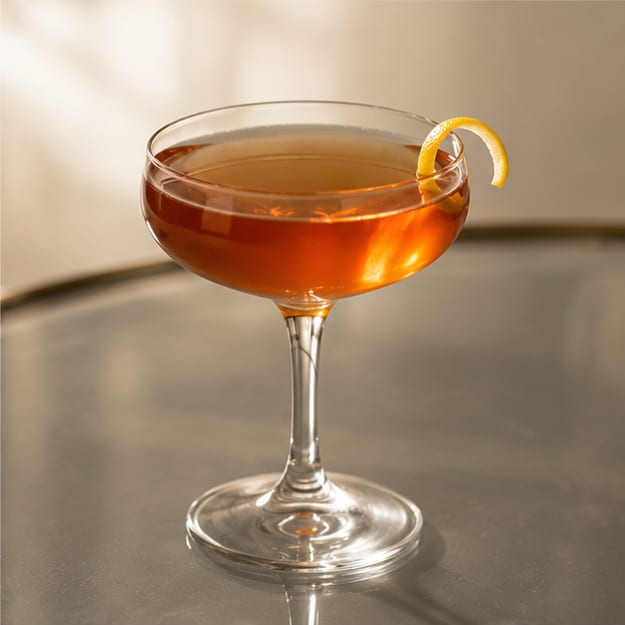
A Scotch-based stirred cocktail that splits the difference between a Rob Roy and a dry Martini by using both sweet and dry vermouth.

scotchherbalmaltysmokybittersweetspirit-forwardvermouthstirredcontemplativeevening

%

ABV

Difficulty

Affinity

Overview

What this drink is like

The first sip is malt and light smoke from the Scotch, backed up by the dark fruit sweetness of sweet vermouth. The middle opens into herbal, floral notes from the dry vermouth and a gentle orange oil lift. The finish is warm and slightly bitter, with the Scotch lingering long after the swallow.

Who will like it

For people who like spirit-forward, herbal drinks and want something richer than a Martini but less sweet than a Rob Roy.

When to drink

This is a slow-evening sipper — pour one when you want to sit with a drink, not knock it back.

Ordering tip

Ask for it with a blended Scotch if you want it approachable, or request a peaty single malt if you want the smoke turned up.

Ice: NoneTemp: ColdCost: $2–$4Glass: CoupeBatch-friendlyMake aheadHome bar friendly

Flavor

Taste profile

The Affinity drinks like a Scotch lover's answer to the Manhattan, but the dry vermouth pulls it in a greener, more herbal direction. You get the malt and faint smoke of the whisky up front, then the sweet vermouth's dark fruit and caramel, and finally the dry vermouth's chamomile-and-thistle finish. It's not a beginner cocktail — the flavors are layered and a bit demanding — but if you enjoy bitter-herbal drinks with real backbone, it rewards attention.

Finish: The finish runs medium-long, with malt warmth, dried herbs, and a faint bitter-orange note that fades slowly.

Primary tastes

herbalearthybitter

Secondary

smokynuttyfloral

Aroma

malted barleydried fruitorange zestdried herbs
  • Bitternessmoderately bitter

    The dry vermouth and orange bitters bring a gentle bitterness that sits behind the Scotch rather than dominating it.

  • Sweetnessmoderately sweet

    The sweet vermouth gives it a rounded sweetness that balances the Scotch but doesn't make it dessert-like.

  • Strengthfairly strong

    This is a spirit-forward drink that sits around 28% ABV, so you'll feel the Scotch warmth on every sip.

  • Refreshinglow refreshment

    This is a contemplative, warming drink — not something you gulp down when you're thirsty.

  • Smokinesslight smoke present

    Blended Scotch brings a mild smoky note that weaves through the drink without taking over.

  • Creaminesslight body

    The vermouths give it some weight and a silky texture, but it stays lean and clean on the palate.

  • Complexityquite complex

    Two vermouths plus Scotch plus bitters means there are a lot of layers pulling in different directions — herbal, fruity, smoky, bitter.

Recipe

Make it at home

Stirred · Coupe · equal parts on Scotch Whisky. A blended Scotch works best here; single malt can overpower the vermouth

Before you start

Put your coupe glass in the freezer for at least 10 minutes before making the drink. Make sure your vermouths are fresh — if they've been open in the cupboard for months, they'll taste flat and oxidized.

Ingredients

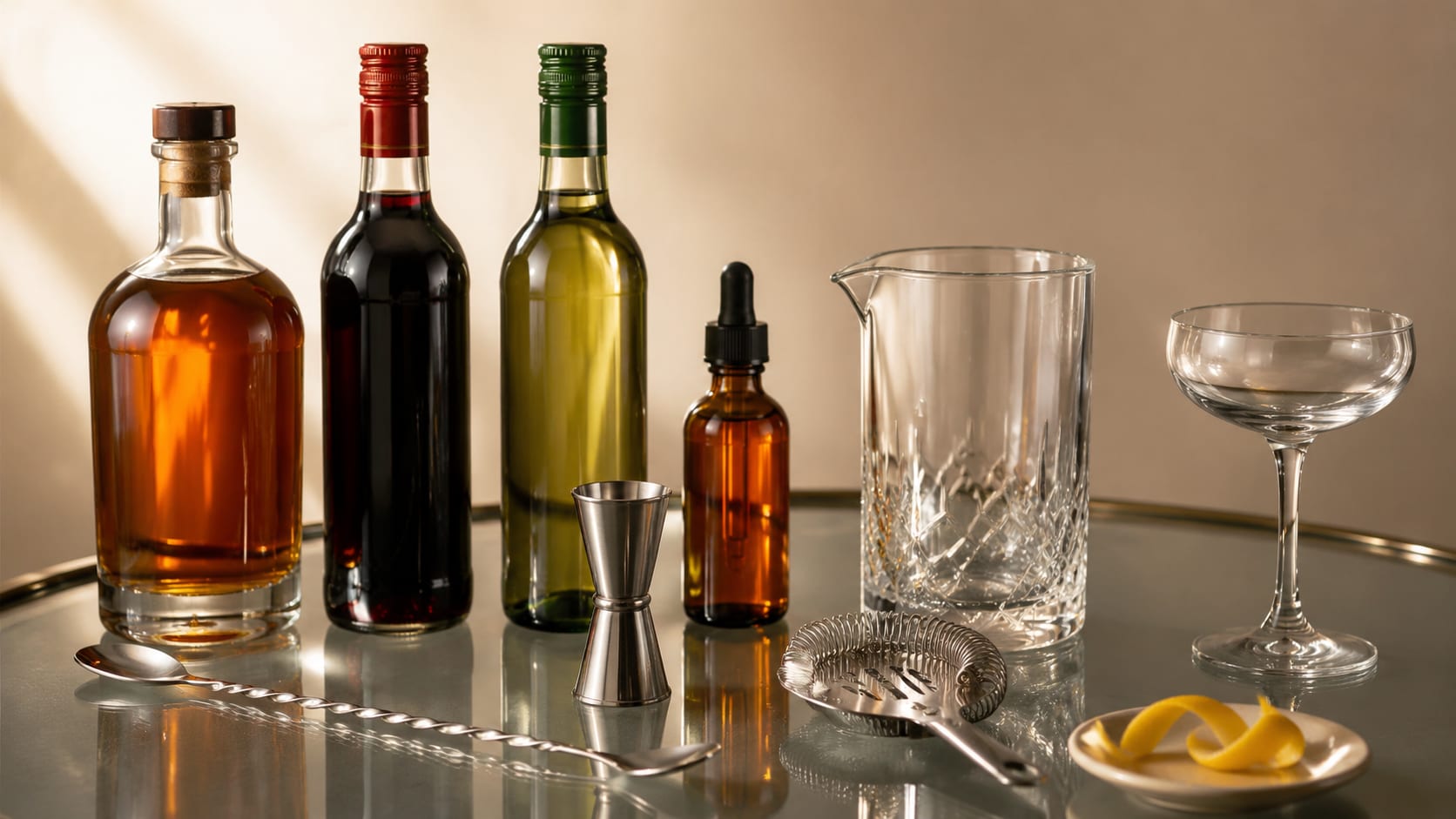
  • Scotch WhiskyBase SpiritBlended Scotch recommended; something like Famous Grouse or Johnnie Walker Black50ml
  • Sweet VermouthVermouthFresh bottle only — sweet vermouth goes off within weeks of opening25ml
  • Dry VermouthVermouthKeep it refrigerated after opening; it fades faster than sweet vermouth25ml
  • Orange BittersBitters2 dashes
  • Lemon TwistGarnishCut from a fresh lemon, about the width of a quarter1 twist

Garnish: Lemon twist

Tools

  • Mixing Glass · Mixing

    Holds the ingredients and ice while you stir to chill and dilute the drink

    At home: A large pint glass works fine

  • Bar Spoon · Mixing

    Stirs the drink smoothly without splashing

    At home: A long-handled spoon or chopstick

  • Jigger · Measuring

    Measures the Scotch and both vermouths accurately

    At home: A tablespoon — 1 tbsp is roughly 15ml

  • Hawthorne Strainer · Straining

    Strains the ice out when pouring the drink into the glass

    At home: A small fine-mesh sieve

  • Coupe Glass · Serving

    Serves the drink chilled and stem-held so your hand doesn't warm it

    At home: A Nick & Nora glass or small wine glass

  • Vegetable Peeler · optional · Garnish

    Cuts a clean strip of lemon peel for the twist

    At home: A small sharp knife

Ingredients and tools to make Affinity
Ingredients and tools

Steps

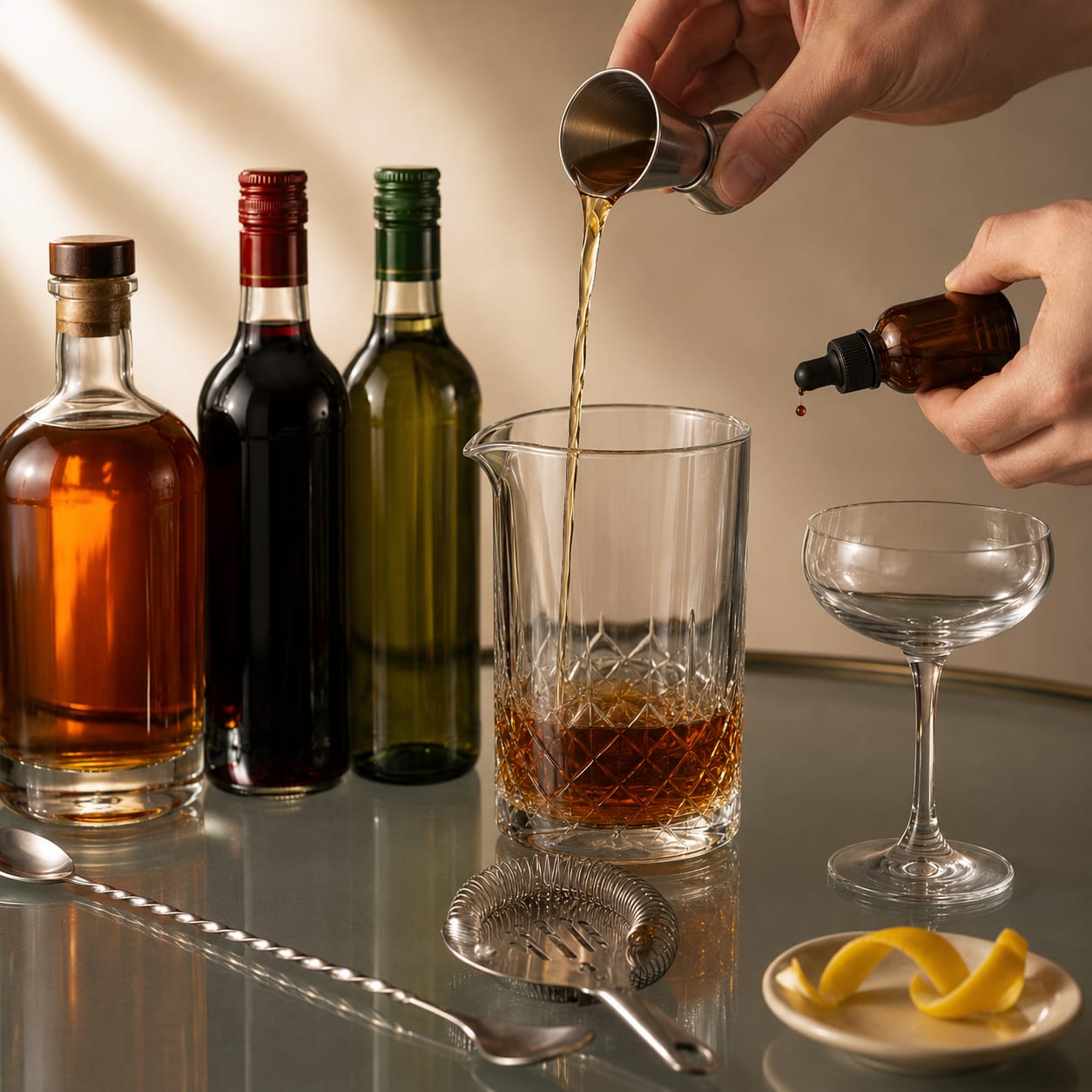
  1. 1

    Take your mixing glass and pour in 50ml Scotch, 25ml sweet vermouth, and 25ml dry vermouth using your jigger. Add 2 dashes of orange bitters straight into the mix. You don't need ice yet — just get everything in the glass first.

    Step 1 — how to make Affinity

    !Pouring the vermouths too quickly and overshooting the measure, which throws off the balance.

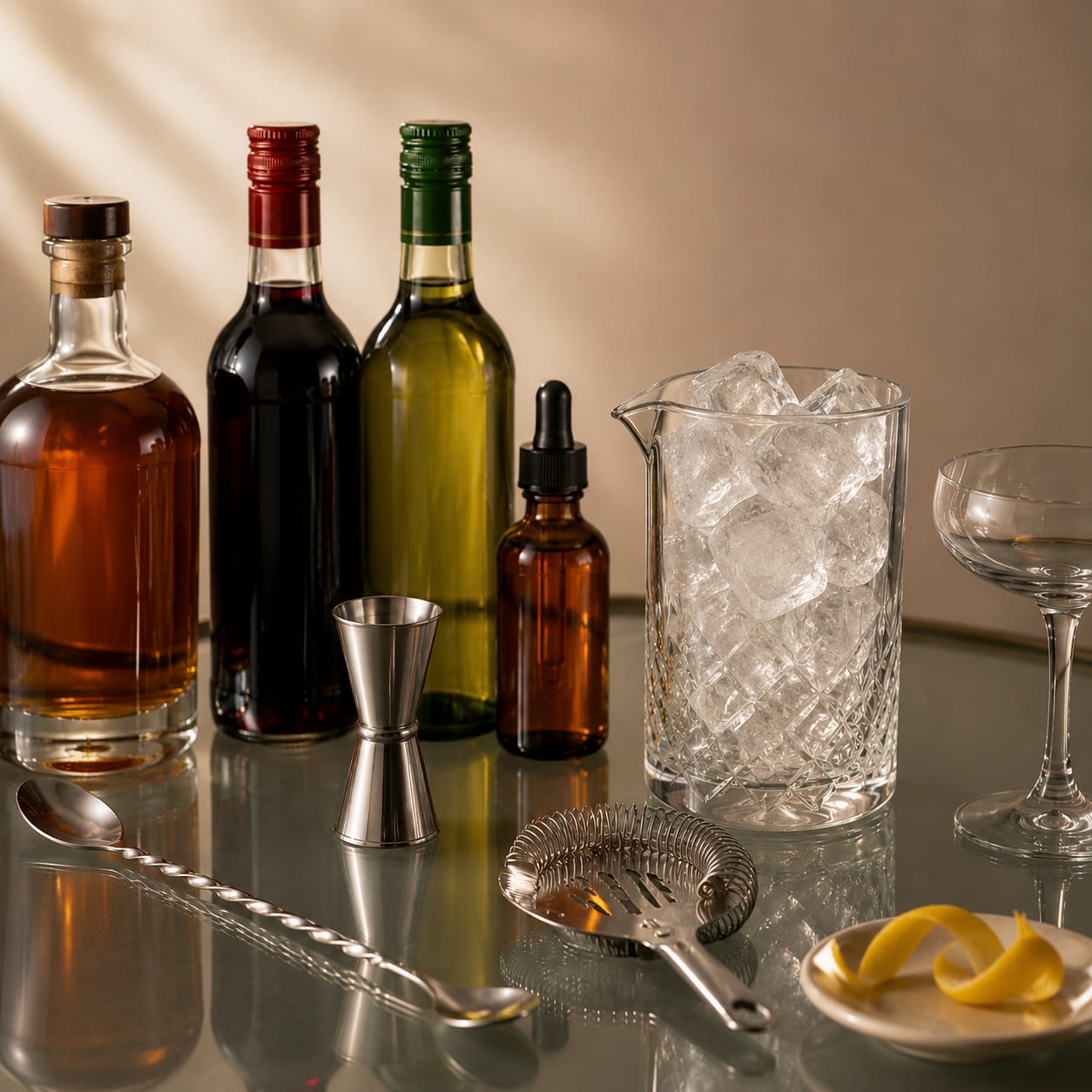
  2. 2

    Fill the mixing glass about three-quarters full with ice — use big cubes if you have them, since they melt slower and give you more control. The ice should sit above the liquid level so everything chills evenly.

    Step 2 — how to make Affinity

    !Using too little ice means the drink takes longer to chill and gets watered down from extra stirring.

  3. 3

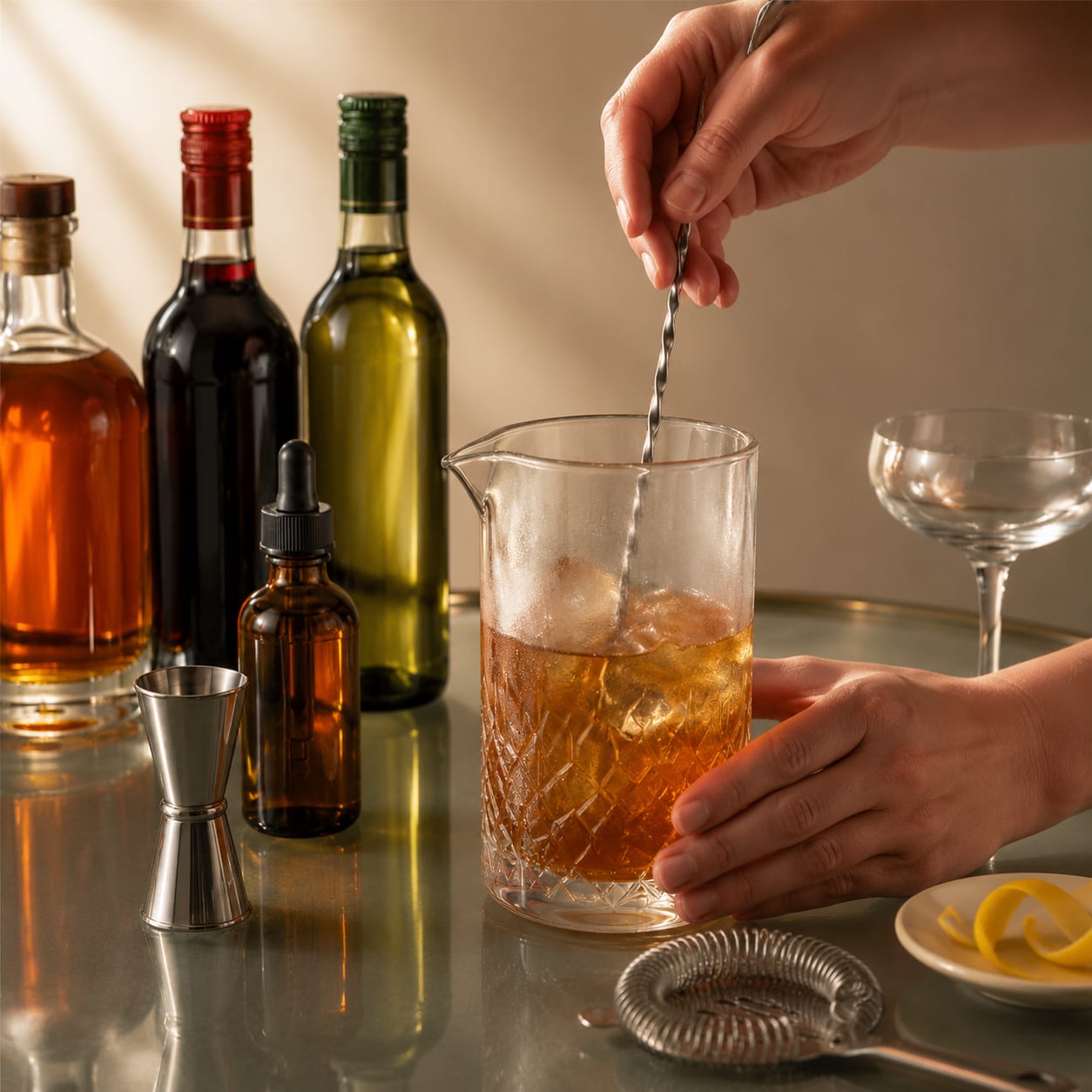
    Stir steadily with your bar spoon for about 25 seconds, moving the ice in smooth circles around the glass. You'll know you're done when the outside of the mixing glass feels cold to the touch and there's a light frost forming on it. The drink should look silky and slightly viscous.

    ~25s

    Step 3 — how to make Affinity

    !Stirring too fast or rattling the ice against the glass — it chips the ice and clouds the drink.

  4. 4

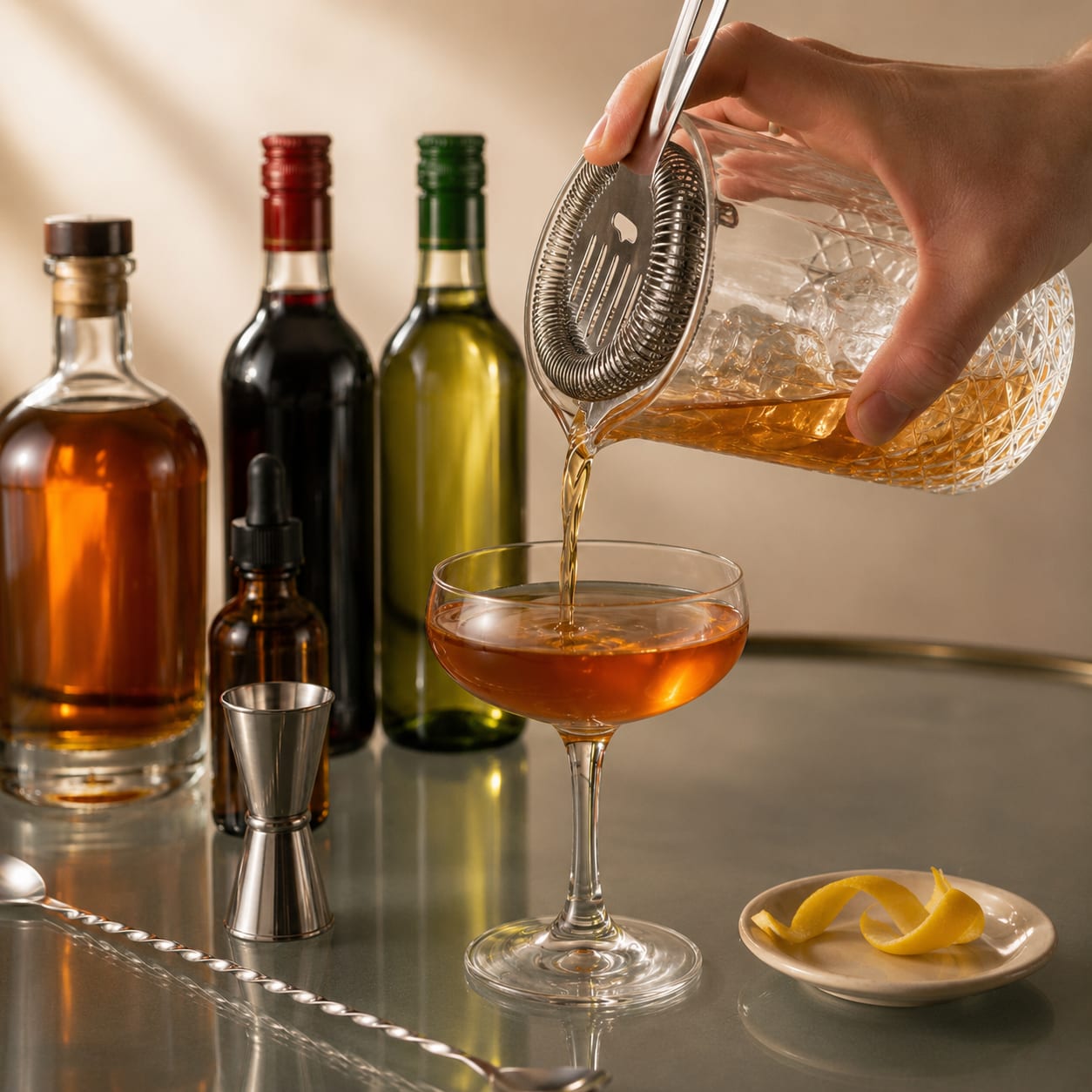
    Place your Hawthorne strainer over the top of the mixing glass and pour the drink into your chilled coupe glass. Pour slowly and steadily so you don't splash. Leave the ice behind — you want a clean, clear drink in the glass.

    Step 4 — how to make Affinity

    !Tilting the mixing glass too aggressively and letting ice chips slip past the strainer.

  5. 5

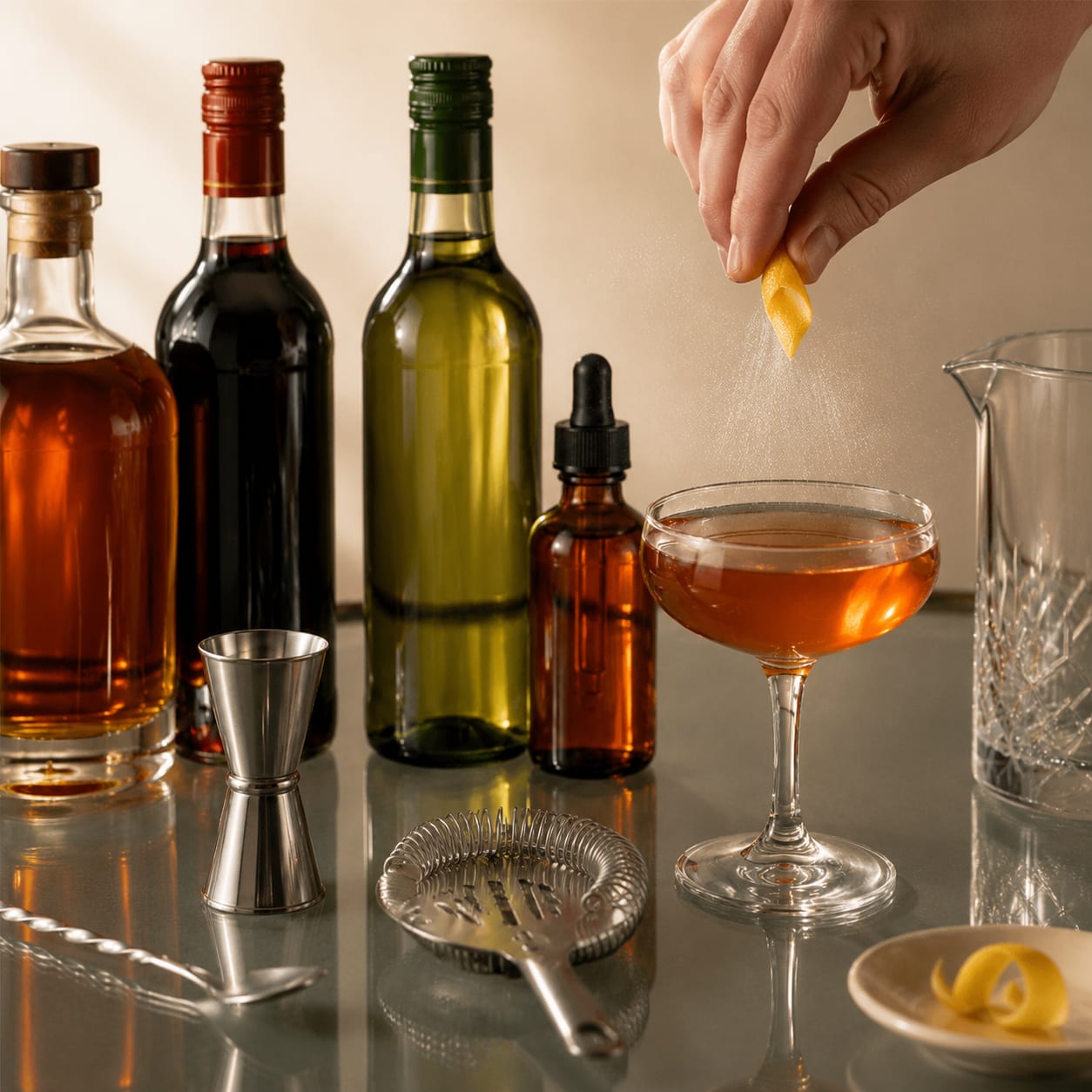
    Take your lemon peel and hold it over the drink, colored side facing down. Give it a quick twist so a fine mist of lemon oils sprays across the surface of the drink. Drop the peel in or rest it on the rim — either way works.

    Step 5 — how to make Affinity

    !Squeezing the peel too hard and dripping bitter white pith juice into the drink instead of just the fragrant oils.

Serve

Serve it right away in the chilled coupe — no ice in the glass. The drink should be cold enough that you can sip it slowly for 10 minutes without it turning warm.

Variations

Ingredient substitutions

Each row shows what you can swap in place of an original ingredient, and how the drink changes.

Swap options for Scotch Whisky

  • Scotch WhiskyIrish Whiskey
    Match
    Common availability

    Scotch WhiskyIrish Whiskey: Loses the smoke and malt, becomes smoother and slightly sweeter with a lighter body.

  • Scotch WhiskyBourbon Whiskey
    Match
    Common availability

    Scotch WhiskyBourbon Whiskey: Replaces smoke with vanilla and caramel sweetness, making the drink rounder and less herbal.

  • Scotch WhiskyPeated Single Malt Scotch
    Match
    Specialty availability

    Scotch WhiskyPeated Single Malt Scotch: Ramps up the smoke dramatically, which can overwhelm the vermouths if you're not careful.

Swap options for Sweet Vermouth

  • Sweet VermouthCarafe Sweet Vermouth
    Match
    Specialty availability

    Sweet VermouthCarafe Sweet Vermouth: Similar profile but with more vanilla and dried cherry notes, slightly richer.

Swap options for Dry Vermouth

  • Dry VermouthLillet Blanc
    Match
    Common availability

    Dry VermouthLillet Blanc: Less herbal and more floral with a subtle quinine bitterness, makes the drink slightly sweeter.

Swap options for Orange Bitters

  • Orange BittersAngostura Bitters
    Match
    Common availability

    Orange BittersAngostura Bitters: Swaps the bright orange note for darker baking spice, making the drink warmer and less citrusy.

Related

Similar cocktails

Cousin drinks that share DNA with this one — each profile stands on its own.

Rob Roy

Similar cocktail

Rob Roy

The Rob Roy uses only sweet vermouth, making it richer and sweeter, while the Affinity splits the vermouth to add herbal dryness.

Match

The Rob Roy is the sweeter, simpler cousin — all malt and fruit. The Affinity's dry vermouth adds a green, herbal edge that makes it more complex but less approachable.

In common: Scotch-forward, stirred, spirit-forward, served up

Ingredients

Both share

Scotch Whisky, Sweet Vermouth, Orange Bitters

Only in Affinity

Dry Vermouth

The Affinity adds dry vermouth to the Rob Roy's template, which dries out the drink and introduces floral, herbal notes that the Rob Roy doesn't have.

Flavor

Shared flavors

Malty Scotch backbone, dark fruit sweetness from sweet vermouth, warm, spirit-forward weight

How Rob Roy differs

Affinity is drier, Affinity has more herbal character, Rob Roy is rounder and more straightforward

View recipe & details →
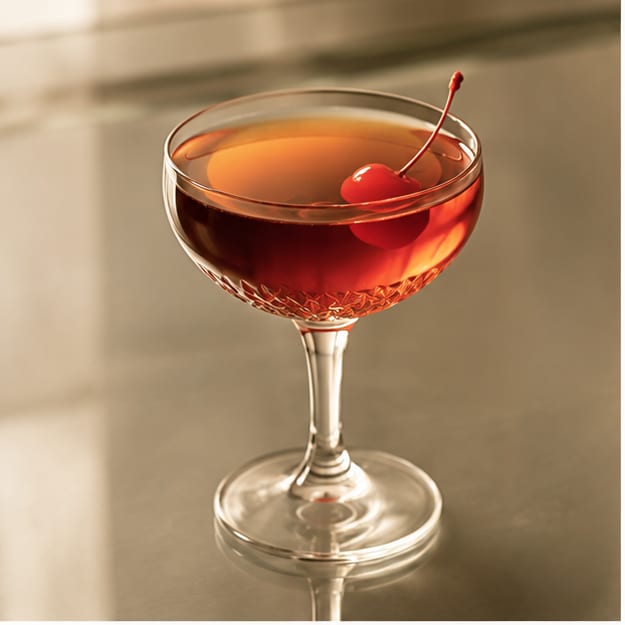
Manhattan

Similar cocktail

Manhattan

The Manhattan uses rye or bourbon instead of Scotch, swapping smoke and malt for spice or vanilla.

Match

Where the Manhattan is warm rye spice and sweet vermouth, the Affinity is malt, smoke, and split vermouth — more layered but less immediately crowd-pleasing.

In common: Stirred, spirit-forward, vermouth-driven sweetness, served up

Ingredients

Both share

Sweet Vermouth, Orange Bitters

Only in Affinity

Scotch Whisky, Dry Vermouth

Only in Manhattan

Rye Whiskey

The Affinity trades the Manhattan's rye for Scotch and adds dry vermouth, making it smokier, more herbal, and less spicy.

Flavor

Shared flavors

Rich vermouth sweetness, spirit-forward structure, orange bitters aromatic lift

How Manhattan differs

Affinity is smokier, Affinity is drier from the dry vermouth, Manhattan is spicier and more straightforward

View recipe & details →
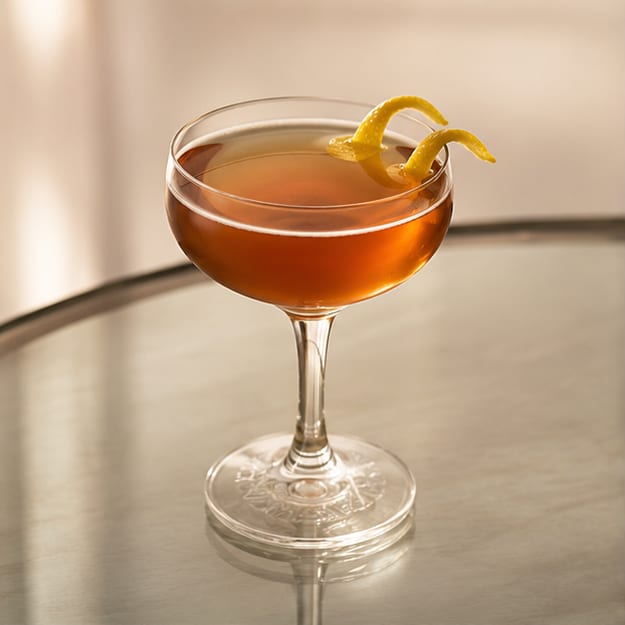
Bobby Burns

Similar cocktail

Bobby Burns

The Bobby Burns uses Bénédictine instead of dry vermouth and bitters, adding honeyed herbal sweetness rather than dry herbal complexity.

Match

Both are Scotch-and-vermouth drinks, but the Bobby Burns leans into honeyed sweetness while the Affinity stays lean and herbal.

In common: Scotch-forward, stirred, sweet vermouth base, served up

Ingredients

Both share

Scotch Whisky, Sweet Vermouth

Only in Affinity

Dry Vermouth, Orange Bitters

Only in Bobby Burns

Bénédictine

The Bobby Burns swaps out the dry vermouth and bitters for Bénédictine, shifting the drink from dry-herbal to sweet-herbal.

Flavor

Shared flavors

Scotch malt character, sweet vermouth fruit, herbal undertones

How Bobby Burns differs

Bobby Burns is sweeter and richer, Affinity is drier and more bitter, Bobby Burns has honey notes from Bénédictine

View recipe & details →

History

Origin

The Affinity first appeared in print in Hugo R. Ensslin's 1915 book 'Recipes for Mixed Drinks.' Some sources link it to the old Waldorf-Astoria bar in New York, but that attribution is unverified and may be retrospective. The name likely refers to the harmonious pairing of two vermouths with Scotch.

Era
1900s
Confidence

The Affinity is not an IBA official cocktail. Proportions vary across sources — some use equal parts Scotch and total vermouth, others lean heavier on Scotch. The 2:1:1 ratio is the most commonly cited. Origin attribution to the Waldorf-Astoria is unverified.

Practical

Tips & pitfalls

What works at home and what to skip when making this drink.

Tips

Worth knowing before you pour

  • Use a blended Scotch — a peaty single malt will bulldoze the vermouths.
  • Keep both vermouths in the fridge after opening and use them within a month.
  • Stir longer than you think — 25 seconds with good ice gets you the right dilution.
  • A lemon twist works better than orange here because it cuts through the malt.

Avoid

Common mistakes

  • Don't use vermouth that's been open for months — it turns flat and sour.
  • Don't shake this drink — it'll go cloudy and lose the silky texture.
  • Don't skip the bitters — they tie the Scotch and vermouth together.